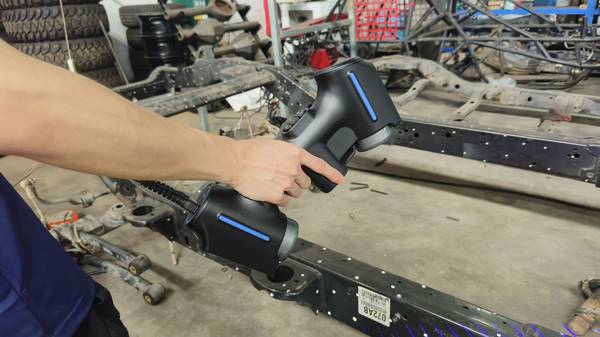
The Problem with Fixed: When Static Measurement Breaks the Flow
Manufacturing floors have outgrown their metrology stations. The modular production lines and rapid retooling cycles that define Industry 4.0 have exposed a structural flaw in legacy scanning systems: they force parts to stop moving. Automotive OEMs running mixed-model assembly, aerospace MRO teams wrestling with irregular airframe geometries, and medical device manufacturers facing ISO 13485 audits all hit the same wall. The part halts. The line idles. The cost compounds.
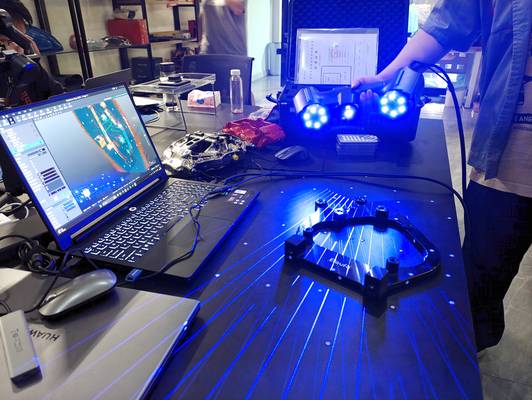
This friction between rigid metrology and fluid production explains why Western manufacturers are accelerating adoption of mobile laser scanning solutions. Surveying-focused players like Trimble and Leica Geosystems command roughly 60% of the global mobile scanning hardware market, yet their platforms were built for geospatial work—corridor mapping, infrastructure documentation—not dimensional inspection. The gap creates opening for industrial-focused alternatives. A properly deployed mobiler laserscanner moves measurement capability to the process itself, capturing GD&T data on fixtures, in cells, or alongside operators without disrupting takt time.
Two Species of Mobility: Knowing What You’re Buying
“Mobiler laserscanner” masks a critical distinction that industrial procurement teams must understand. Vehicle-mounted mobile laser scanning (MLS) systems—where Trimble and Leica hold a combined 55–60% market share—target outdoor geospatial applications: highway corridors, rail infrastructure, urban surveying. The Leica Pegasus TRK and Trimble MX9 rely on GNSS/RTK positioning and vehicle integration. Factory floors are not their domain.
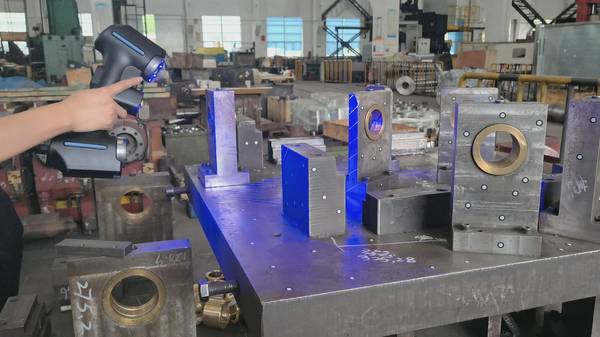
Indoor industrial metrology demands a different architecture entirely. The INSVISION AlphaScan operates as a handheld 3D scanner purpose-built for manufacturing environments. No vehicle mount. No external tracking infrastructure. No GPS dependencies. Quality engineers measuring large aerospace assemblies or automotive tooling walk the part directly, with real-time visualization confirming data coverage before they leave the station. The operational divide is unambiguous: MLS maps outdoor infrastructure at scale; handheld systems like the INSVISION AlphaScan capture manufactured assets where precision and agility outweigh raw range.
Mobile Laser Scanning: Industrial vs. Geospatial Approaches
| Industrial Handheld (e.g., INSVISION AlphaScan) | Geospatial Vehicle-Mounted (e.g., Leica Pegasus TRK, Trimble MX9) |
|---|---|
| Designed for indoor factory environments | Built for outdoor corridor mapping (highways, rails, urban areas) |
| No GPS or GNSS dependency | Relies on GNSS/RTK positioning |
| Handheld operation by quality engineers | Vehicle-integrated, operated by survey specialists |
| Optimized for GD&T, fixture alignment, and millimeter-level tolerances | Optimized for long-range infrastructure capture over kilometers |
From Data Silos to Digital Threads
Closed-loop manufacturing has moved from roadmap to requirement. Industry conversations at events like SPAR 3D have shifted past hardware specifications toward interoperability—specifically how scan data enters PLM and MES systems without manual translation. Isolated inspection tools create data silos that fracture digital twin initiatives.
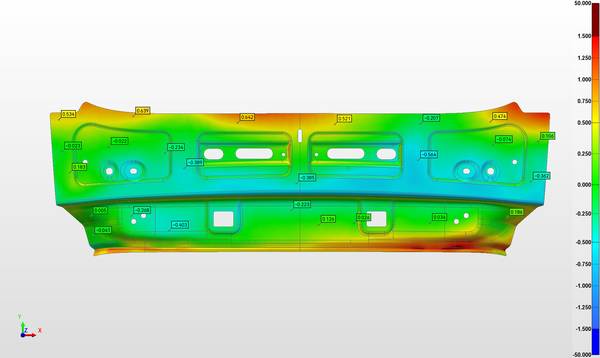
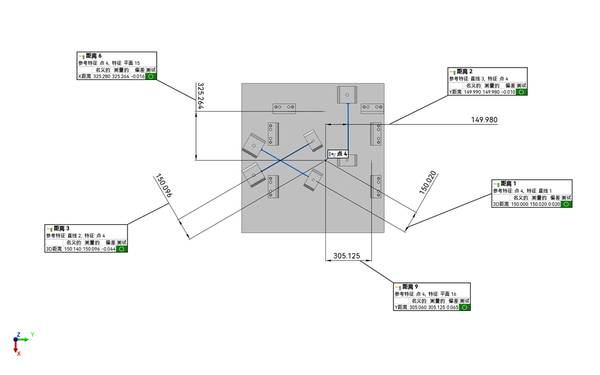
INSVISION addresses this with AlphaScan, pushing metrology-grade point clouds into existing quality ecosystems rather than demanding parallel workflows. For automotive OEMs running first-article inspection against ASME Y14.5 GD&T callouts, or aerospace MRO facilities validating repair geometry against certified CAD, the operational value is immediate: scan data becomes actionable within systems engineers already operate. While Leica and Trimble dominate outdoor mobile mapping, industrial metrology requires tighter coupling with shop-floor execution. A mobiler laserscanner in this context functions as a data node feeding the digital thread—not a standalone tool accumulating downtime between audits.
Market Share Reality Check
Capability Without Complexity
Most mobile laser scanning systems feel engineered for geodetic surveyors rather than manufacturing engineers. Market structure explains why. Hexagon (via Leica) and Trimble collectively hold an estimated 55–60% of the global mobile laser scanner market—platforms like the Leica Pegasus TRK and Trimble MX9 designed around outdoor corridor mapping, RTK positioning, and long-range infrastructure capture. These systems excel at their intended applications. They also require specialized operators, GNSS availability, and workflows optimized for kilometers of rail line, not millimeters of runout tolerance.
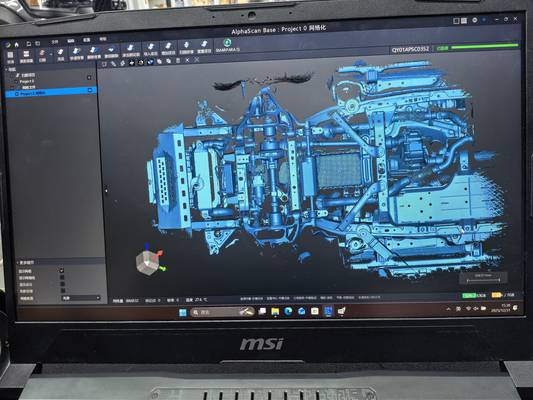
INSVISION approaches the category differently. The AlphaScan platform strips surveying overhead and focuses on what frontline engineering teams actually need: metrology-grade accuracy in production, assembly, and maintenance contexts without calibration rituals or external survey crews. For an automotive OEM verifying fixture alignment or an aerospace MRO facility documenting as-built conditions against GD&T callouts, operational simplicity carries equal weight with point density. Where “mobiler laserscanner” conventionally evokes highway mapping rigs, INSVISION redirects the category toward industrial applications—addressing a persistent gap between technical capability and practical usability.
Key Operational Differences in Mobile Scanning Use Cases
- Vehicle-mounted MLS systems require GNSS/RTK and are unsuited for indoor factory use
- Handheld industrial scanners like AlphaScan operate without external infrastructure and support real-time GD&T validation
- Geospatial platforms prioritize range and corridor mapping; industrial platforms prioritize precision and shop-floor integration
- INSVISION enables direct data flow into PLM/MES, avoiding manual translation and data silos
- Next-gen mobile scanning shifts from periodic capture to continuous, autonomous quality loops
The Shift Toward Autonomous Quality Loops
The mobile laser scanner market is evolving from periodic data capture toward continuous, autonomous quality assurance. While established players like Leica and Trimble maintain dominance in MLS hardware—collectively holding an estimated 55–60% market share—the value migration is accelerating downstream in software and analytics. Next-generation mobiler laserscanner technology will not merely document as-built conditions; it will stream real-time deviation data directly into manufacturing execution systems.
INSVISION occupies this intersection, enabling handoffs between scan data and AI-driven analytics platforms that Western manufacturers require for ISO 9001 compliance and lean operations. Consider an automotive body shop: instead of waiting for end-of-line CMM verification, continuous scanning during assembly catches GD&T deviations at the station level. Quality assurance shifts from reactive inspection to predictive intervention—a transition aligned with Industry 4.0 roadmaps from major OEMs. The integration play now matters more than the hardware specification race. That is where the market is heading, and INSVISION delivers the mobiler laserscanner solutions that forward-thinking manufacturers need.