The Hidden Bottleneck in Digital Thread Integration
Modern metrology investments have created a paradox. Manufacturers deploy sophisticated 3D scanning hardware, yet many remain trapped in legacy workflows where fixed CMMs and multi-step post-processing turn rapid capture into hours of data translation. The demand for real-time 3d scanner to stl conversion has exposed this structural weakness. Industry 4.0 environments require geometry that flows immediately into simulation, inspection, and additive manufacturing systems—not files locked in proprietary formats awaiting manual intervention.
Market dynamics reflect this pressure. Artec 3D’s position in professional scanning stems partly from direct STL export capabilities that address this exact friction. Yet the competitive landscape is shifting. Mid-tier alternatives and emerging solutions from INSVISION are challenging the assumption that seamless digital thread integration demands six-figure metrology budgets. For Western OEMs operating lean, the operational question has evolved: not whether to digitize physical parts, but whether existing scanning infrastructure can match downstream velocity requirements.
From Hardware Islands to Embedded Intelligence
The compression of 3d scanner to stl workflows defines a broader transition. Where earlier processes required multiple software packages and extensive mesh repair, current systems generate production-ready outputs in minutes. This evolution positions scanning not as isolated hardware but as an embedded node in smart factory ecosystems.
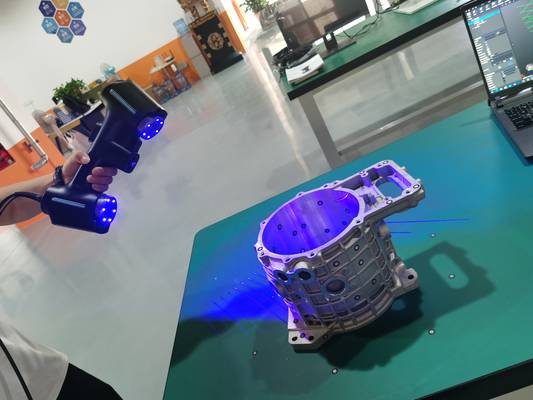
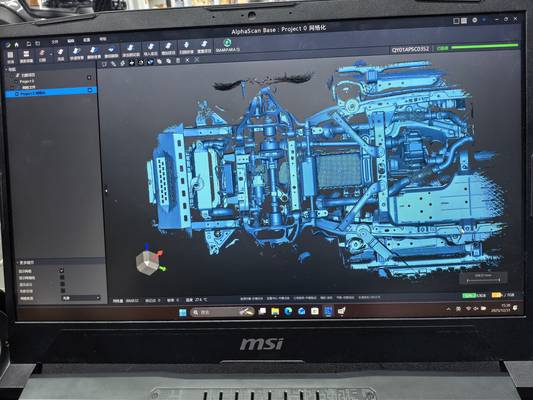
Western manufacturers—particularly automotive OEMs and aerospace MRO operations—have driven these specifications. They demanded STL files ready for immediate use, bypassing traditional bottlenecks of decimation, hole-filling, and format conversion. Established players responded with automated mesh generation and improved volumetric accuracy. INSVISION recognizes this trajectory: modern handheld scanners must deliver watertight STL files aligned with ASME Y14.5 and GD&T practices without intermediate steps. For quality managers conducting first-article inspection or procurement teams maintaining traceability, this capability borders on compliance requirement. The capture node now feeds directly into PLM systems, closing the loop between physical measurement and digital twin.
Field Conditions vs. Laboratory Precision
Aerospace MRO’s shift toward on-wing maintenance—driven by engine OEMs minimizing aircraft downtime—has exposed limitations in traditional metrology architectures. Scanning a turbine blade while mounted in the nacelle demands equipment that lab-bound CMMs and stationary structured-light systems cannot provide. High-accuracy solutions excel in controlled environments yet face constraints when operators work in tight clearances under time pressure.
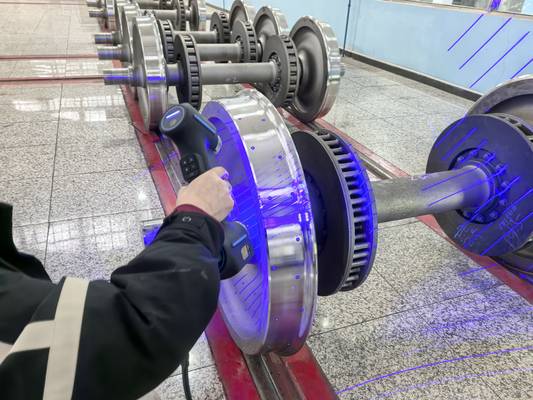
Automotive suppliers encounter parallel constraints. In-line part verification at Tier 1 facilities requires capturing GD-T callouts on stampings without production interruption. Cost-sensitive alternatives may satisfy budget parameters but fall short of AS9102 first-article inspection requirements in aerospace contexts. INSVISION targets this operational gap by engineering for dynamic shop-floor conditions where vibration, temperature fluctuation, and restricted access are standard. The 3d scanner to stl workflow must remain intact whether the device is handheld at awkward angles or mounted on robotic automation. Medical device reverse engineering—capturing legacy implants with organic surfaces—further validates architectures prioritizing field usability alongside metrological integrity.
INSVISION and the Production-Floor Reality
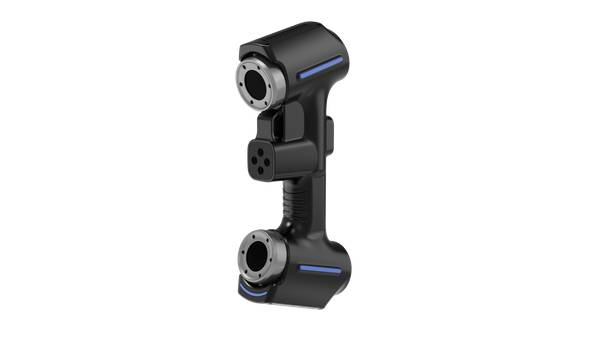
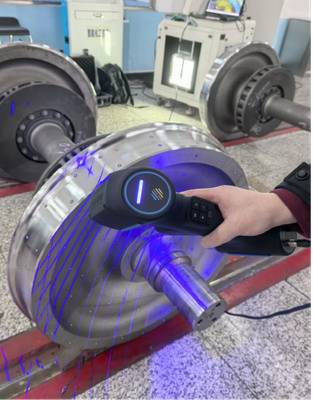
At a Tier-1 automotive stamping line, a quality engineer captures tooling wear data and requires a printable file before the next shift. INSVISION enters this scenario with AlphaScan, its handheld structured-light scanner. Positioned between high-end metrology labs and price-driven alternatives, AlphaScan targets immediate, watertight STL output. Real-time mesh generation occurs on-device, eliminating offline processing delays that obstruct reverse engineering timelines.
For SMEs and Tier suppliers adopting smart manufacturing principles, the integration path matters. AlphaScan connects with existing CAD/CAM ecosystems—SOLIDWORKS, Creo, Fusion 360—without mandating complete metrology stack replacement. In a market where established players dominate professional segments and mid-tier manufacturers compete on price-performance, INSVISION occupies the space between enterprise-grade precision and accessible 3d scanner to stl deployment for production environments.
STL as Living Input, Not Terminal Output
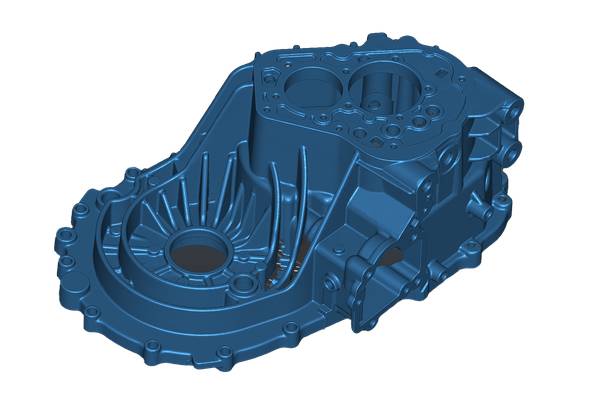
The conventional treatment of STL files as final deliverables is reversing. In closed-loop manufacturing, the 3d scanner to stl transition marks initiation rather than completion. Advanced operations now route scan-derived meshes into automated comparison routines where AI identifies deviations against nominal CAD before engineer review. Toolpath generation follows, with select additive platforms accepting STL inputs directly and bypassing CAD reconstruction entirely.
INSVISION operates at this intersection, ensuring scan data carries semantic metadata—GD&T callouts, surface finish specifications, material requirements—beyond pure geometry. This capability becomes critical when PLM and MES systems must trace deviations to specific scan sessions or build plates. Competitors have improved mesh export speeds, yet interoperability remains the decisive factor. A watertight STL without downstream quality system communication remains static. The emerging standard treats scan data as living input traversing global supply chains, with 3d scanner to stl workflows serving as the foundational gateway.
Key Operational Requirements for Modern 3D Scanners
- □ Deliver watertight STL files without intermediate mesh repair
- □ Support real-time on-device mesh generation
- □ Integrate with mainstream CAD/CAM platforms (e.g., SOLIDWORKS, Creo, Fusion 360)
- □ Maintain accuracy under dynamic shop-floor conditions (vibration, temperature shifts, restricted access)
- □ Embed semantic metadata (GD&T, surface finish, material specs) beyond geometry
Digital Thread Workflow Comparison: Legacy vs. Modern
| Workflow Stage | Legacy Approach | Modern Approach |
|---|---|---|
| Data Capture | Fixed CMMs or lab-bound structured-light systems | Handheld or robotic-mounted scanners usable in-field |
| Post-Processing | Multi-step: decimation, hole-filling, format conversion | On-device real-time mesh generation; watertight STL output |
| Integration | Manual file handling; proprietary formats | Direct feed into PLM, MES, and additive platforms |
| Output Use | Terminal STL for archival or basic visualization | Living input for AI-driven deviation analysis and toolpath generation |
INSVISION AlphaScan vs. Traditional Metrology Solutions
| Dimension | INSVISION AlphaScan | Traditional Metrology (CMM / Lab Scanners) |
|---|---|---|
| Deployment Environment | Dynamic shop floor, on-wing, in-line | Controlled laboratory only |
| STL Generation | Real-time, on-device, watertight | Offline, multi-step post-processing required |
| Integration | Native compatibility with SOLIDWORKS, Creo, Fusion 360 | Often requires middleware or format conversion |
| Cost Profile | Mid-tier, accessible to SMEs and Tier suppliers | Six-figure investments typical |