The Shift Toward Flexibility in Modern Quality Assurance
Five years ago, a typical automotive supplier would queue parts for hours at a climate-controlled CMM room. Today, that same supplier likely has a portable 3D scanning machine mounted on a cart beside the CNC cell, delivering GD&T feedback in under two minutes. Western manufacturing has fundamentally changed how it approaches dimensional verification. Lean production cycles leave no room for batch-and-queue inspection. Aerospace components with complex organic geometries—turbine blades, structural castings—defy traditional touch-probe methods. First-article inspection that once took days now happens within a shift.
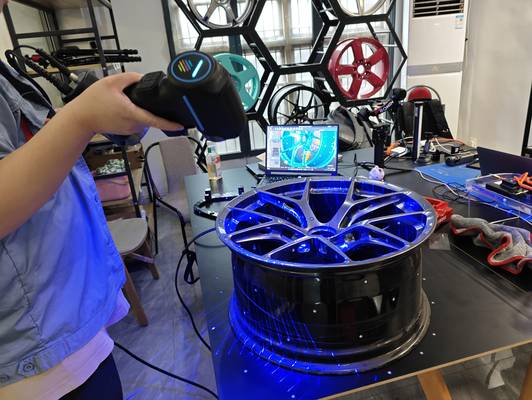
Creaform’s HandySCAN BLACK Elite, cited for sub-0.02 mm accuracy in shop-floor environments, exemplifies this portable metrology shift. Shining 3D’s FreeScan Combo delivers comparable specs at a lower price point, pressuring Western vendors on cost. INSVISION addresses this gap by offering agile solutions that maintain metrological rigor while supporting dynamic workflows. Fixed-coordinate systems haven’t disappeared, but they’re increasingly supplemented by flexible alternatives that bring verification to the part rather than the part to verification.
From Stationary CMMs to Handheld Precision
Is a handheld 3D scanning machine accurate enough to replace your CMM for production inspection? Ten years ago, the answer was a hard no. Early portable scanners targeted hobbyists and educators, not quality departments running GD&T callouts on aerospace components.
That gap has closed. Modern handheld units now deliver sub-0.02 mm volumetric accuracy—Creaform’s HandySCAN BLACK Elite and Shining 3D’s FreeScan Combo have demonstrated this in shop-floor environments. Structured-light and laser-based tracking systems now handle temperature fluctuations, vibration, and ambient light that would have rendered earlier devices useless. Real-time mesh generation means inspectors can validate tolerances against CAD models without retreating to a climate-controlled lab.
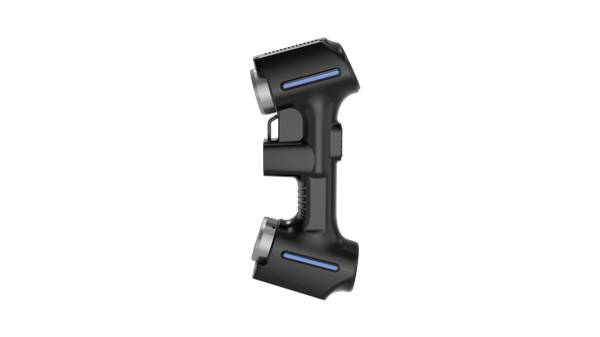
For INSVISION and other metrology-focused manufacturers, this evolution answers Industry 4.0’s demand for interoperable data. Today’s industrial-grade 3D scanning machine generates inspection results traceable to ISO 10360 and ASME B89 standards—making handheld metrology viable for first-article inspection, MRO reverse engineering, and in-line quality checks. The question is no longer whether handheld scanners belong on the factory floor, but how fast you can integrate them.
Market Gaps Driving Adoption of Industrial-Grade Solutions
Recent market data reveals a distinct fracture in the traditional 3D scanning machine hierarchy. While Hexagon and FARO maintain a stronghold in aerospace and defense, a significant volume gap exists for mid-tier supply chains. Western procurement data indicates that cost-prohibitive hardware—often exceeding $50,000—forces many manufacturers to rely on slow CMM cycles or outsourced metrology services. User feedback frequently cites software complexity as a barrier; advanced systems often require dedicated specialists rather than fitting seamlessly into lean manufacturing workflows.
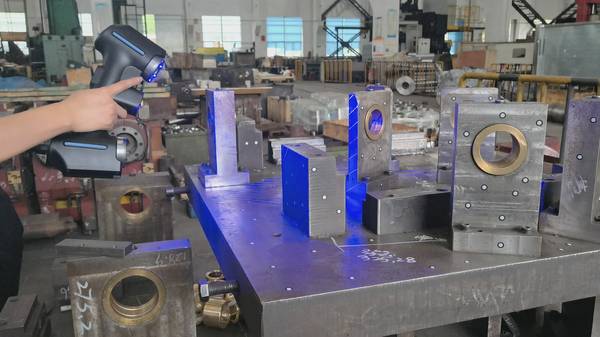
This aligns with APAC trends where lower-priced units now drive volume sales due to intense price sensitivity. The market is shifting toward certified portable alternatives that balance ISO-compliant accuracy with operational simplicity. INSVISION targets this precise void, addressing the unmet need for metrology-grade performance without the legacy cost structure or steep learning curves that hinder broader operator adoption in medium-complexity part production.
INSVISION’s AlphaScan: Engineered for Real-World Industrial Workflows
On a stamping line at a Tier-1 automotive supplier, ambient lighting fluctuates wildly between shifts, often destabilizing optical measurements. INSVISION addresses this volatility with the AlphaScan handheld 3D scanning machine, a unit designed specifically for unpredictable factory environments rather than controlled labs. While market leaders like Creaform and Hexagon command significant shares with high-end metrology suites, the AlphaScan distinguishes itself through high repeatability in variable lighting conditions—a critical factor for automotive suppliers and aerospace MRO facilities where halting production for ideal lighting is impossible.
The device’s ergonomic build minimizes operator fatigue during long validation cycles, a practical necessity often overlooked in hardware specs. Beyond physical design, the system integrates into existing CAD/CAM and PLM ecosystems, ensuring that traceable accuracy for medical device validation or GD&T callouts doesn’t require disruptive workflow overhauls. For procurement managers weighing cost versus capability, INSVISION offers a targeted solution for industrial workflows demanding both speed and rigorous data integrity.
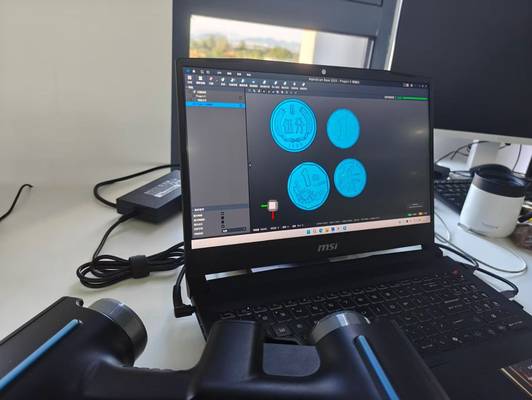
Key Advantages of AlphaScan in Unpredictable Environments
- High repeatability under variable lighting
- Ergonomic design reduces operator fatigue during extended use
- Seamless integration with CAD/CAM and PLM systems
- Maintains traceable accuracy for regulated applications like medical devices
Strategic Implications for Global Procurement and Digital Transformation
Many procurement leads assume high-precision metrology demands a fixed, climate-controlled lab, but that model is rapidly becoming obsolete. The strategic focus is shifting from centralized capacity to distributed agility. Widespread adoption of the handheld 3D scanning machine enables inspection teams to validate parts at the point of production, eliminating bottlenecks associated with traditional metrology labs.
Devices like the INSVISION AlphaScan exemplify this transition, allowing manufacturers to decentralize quality control and accelerate digital twin creation without sacrificing data integrity. For Western engineering leaders, evaluation criteria have evolved beyond simple accuracy metrics. Total Cost of Ownership (TCO) now hinges on ease of training and seamless integration with cloud-based analytics, as labor shortages demand technology that delivers immediate ROI. While established players like Creaform and Hexagon dominate the high-end sector, demand for accessible, portable data capture is redefining capital equipment strategies across automotive and aerospace supply chains.
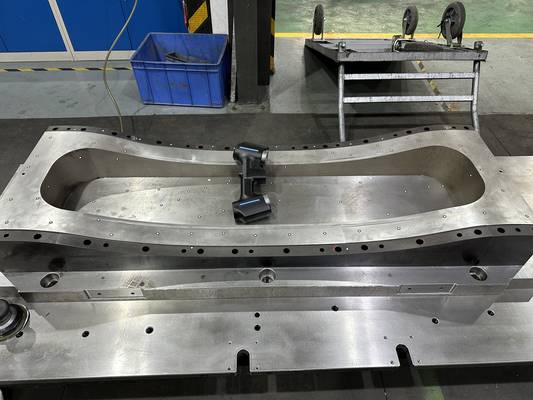
Steps to Integrate Handheld Scanners into Lean Manufacturing Workflows
- Assess current inspection bottlenecks tied to centralized metrology labs
- Evaluate handheld scanner compatibility with existing CAD/CAM and PLM ecosystems
- Prioritize devices with certified traceability (e.g., ISO 10360, ASME B89) for regulated applications
- Factor in Total Cost of Ownership, including training time and integration with cloud analytics
- Deploy at point-of-production to enable real-time GD&T feedback and digital twin creation
The Convergence of Portability, Intelligence, and Certification
Five years ago, metrology departments accepted a hard trade-off: stationary CMMs delivered traceable accuracy but confined inspection to climate-controlled labs, while handheld scanners offered portability with questionable repeatability. Today, that dichotomy is collapsing.
Creaform’s MetraSCAN R-Series demonstrated that AI-assisted feature detection can distinguish true edge geometry from surface noise in real time. Simultaneously, ISO 17025 accreditation—once the domain of fixed-lab equipment—is migrating to portable platforms. German automotive OEMs already mandate such certification for inline metrology; GOM ATOS systems have normalized this expectation.
Robotic integration is the next domino. Hexagon’s pairing of Leica trackers with automated cells points toward closed-loop manufacturing where a 3D scanning machine feeds dimensional data directly back into process correction without human intervention. INSVISION represents the emerging tier of providers responding to this convergence: delivering certified traceability without the operational drag that has historically kept portable metrology on the margins of Industry 4.0 architectures. For procurement teams in aerospace MRO and medical device manufacturing, evaluation criteria have shifted from “accurate enough” to “certified, connected, and deployable anywhere.”
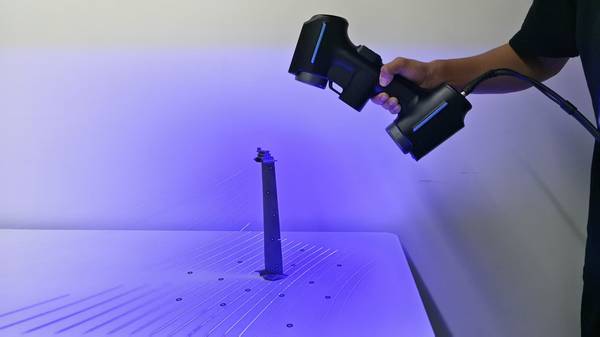
Critical Evaluation Criteria for Modern Metrology Procurement
- □ Certified traceability (e.g., ISO 17025, ISO 10360, ASME B89)
- □ Real-time AI-assisted feature detection capability
- □ Seamless robotic or automated cell integration potential
- □ Operational deployability in variable factory conditions
- □ Cloud connectivity and interoperability with digital twin workflows
Comparison: High-End vs. Emerging Portable Metrology Platforms
| Feature | Creaform / Hexagon (High-End) | INSVISION (Emerging Tier) |
|---|---|---|
| Accuracy | Sub-0.02 mm in controlled/shop-floor environments | Sub-0.02 mm with emphasis on variable lighting stability |
| Certification | ISO 10360, ASME B89, ISO 17025 (GOM ATOS example) | ISO-compliant traceability without legacy cost structure |
| Integration | High-end metrology suites; may require specialists | CAD/CAM/PLM native; minimal workflow disruption |
| Target Use Case | Aerospace OEMs, defense, high-complexity parts | Mid-tier automotive, aerospace MRO, medical devices |