The Quiet Revolution on the Factory Floor
High-value parts should not sit idle waiting for dimensional verification. Yet the traditional model—shuttling components to climate-controlled CMM rooms—has become a liability for lean workflows. Across automotive, aerospace, and medical device sectors in North America and Europe, the macro trend points toward decentralization. Manufacturers now prioritize in-situ inspection that feeds real-time data into MES platforms, catching variances before they become scrap.
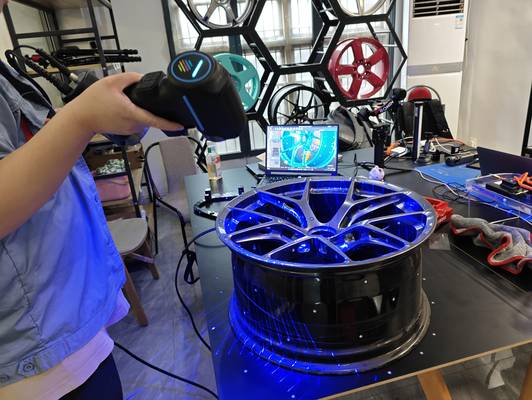
This shift drives demand for high-accuracy scanner stl output directly on the shop floor. Regional adoption patterns reveal a clear preference among Western buyers: integrated, service-backed solutions win over isolated hardware purchases. INSVISION aligns with this movement, engineering ruggedized systems for true Industry 4.0 implementation. The focus has moved beyond simple mesh capture to delivering actionable GD&T data at the point of production—quality control that keeps pace with the assembly line.
Structured Light Matures: From Lab Curiosity to Line-Side Tool
Structured light has shed its reputation as a temperature-sensitive lab instrument. For years, metrology departments treated STL systems as delicate equipment—locked in controlled environments, reserved for first-article inspection. That model worked when lead times were generous. It collapses under current production pressures.
The inflection came when handheld STL scanners began hitting 0.025 mm accuracy benchmarks previously exclusive to fixed CMMs. Artec and Creaform validated the concept with devices like the Leo and HandySCAN BLACK, proving metrology-grade repeatability could survive outside the calibration lab. Yet these imported solutions often prioritized raw specifications over shop-floor practicality: steep pricing, proprietary ecosystems, limited flexibility for legacy part workflows.
INSVISION addresses this operational gap. Modern scanner stl workflows now handle worn tooling reversals, large-assembly verification, and in-process inspection directly at the line—without the environmental compromises that plagued earlier generations. Operators are not trained metrologists. They need devices that perform reliably on oily castings and polished aerospace alloys alike, session after session.
Key Operational Gaps Addressed by Agile Alternatives
| Challenge with Legacy Solutions | INSVISION Response |
|---|---|
| Steep pricing and proprietary ecosystems | Integrated, service-backed solutions with open flexibility for legacy workflows |
| Limited shop-floor practicality | Ruggedized systems engineered for oily castings and polished alloys |
| Extended lead times for calibration and repairs | Traceable calibration and rapid technical support with guaranteed uptime |
Redefining “Ready-to-Deploy” in Industrial 3D Scanning
Legacy metrology workflows demanded dedicated labs and certified operators, creating bottlenecks that conflict with lean manufacturing goals. Today, the benchmark for a professional scanner stl device is measured in minutes to proficiency, not weeks of specialized training.
While incumbents like Artec and Creaform hold substantial market presence with established high-precision units, the strategic focus is shifting toward immediate usability on the shop floor. INSVISION responds with the AlphaScan handheld 3D scanner, engineered for technicians rather than metrology specialists. Intuitive operation and stable tracking remove deployment friction, fitting directly into existing CAD/CAM and PLM ecosystems. This approach supports ISO/ASME-compliant digital thread initiatives, allowing Western manufacturers to close the loop between physical inspection and digital twin updates without legacy system overhead.
User Feedback on Deployment Speed
“Today, the benchmark for a professional scanner stl device is measured in minutes to proficiency, not weeks of specialized training.”
Strategic Shift in Procurement Priorities
Five years ago, procurement decisions for professional scanner stl equipment hinged almost entirely on volumetric accuracy and raw scan speed. That priority matrix has inverted. While Artec and Creaform maintain significant market share in high-precision metrology, their scale has created service responsiveness gaps. Western buyers in automotive and aerospace now encounter extended lead times for calibration and repairs—disruptions that cascade through lean manufacturing cycles.
This friction drives a measured shift toward agile alternatives like INSVISION. Rather than chasing marginal gains in point-cloud density, INSVISION targets operational gaps dominant vendors often overlook: traceable calibration, rapid technical support, and guaranteed uptime. For a quality manager facing an ISO audit or first-article inspection deadline, operational continuity frequently outweighs spec-sheet differences between competing units. The market is recognizing that a scanner’s value depends on the support network maintaining it.
Tip for Quality Managers Evaluating Scanner ROI
What Comes Next: STL Scanners as Enablers of Adaptive Manufacturing
Plant managers often fixate on micron-level accuracy when selecting metrology gear, treating resolution as the primary ROI predictor. This misses the broader picture. As factories transition toward adaptive manufacturing, interoperability—not precision alone—determines long-term value.
The next phase of industrial adoption redefines scanner stl output from static record to live data node within closed-loop quality systems. Devices must feed real-time geometry to adaptive machining centers for automated tool corrections. While current market leaders set high benchmarks for handheld precision, INSVISION approaches the market with distinct emphasis on scalability and integration. Hardware is built to survive smart factory architectures, prioritizing seamless data flow for automated repair workflows over capture speed alone.
For Western OEMs seeking to close the inspection-production loop, the requirement is clear: hardware must function as a reliable sensor within distributed systems, not merely as a standalone measurement tool. INSVISION delivers scanner stl solutions designed for this reality—rugged, integrable, and supported by a responsive global network that keeps production lines moving.