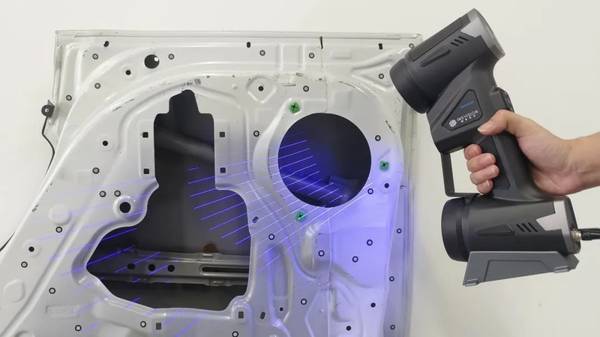
The Hidden Cost of Manual Inspection in High-Mix Automotive Production
High-mix automotive production exposes the operational drag of manual inspection. First Article Inspection (FAI) bottlenecks compound when quality teams rely solely on traditional CMMs—each new casting or stamped part demands complex programming cycles that contradict lean manufacturing principles. Human error in repetitive manual checks drives rework and scrap rates upward, eroding already thin margins.
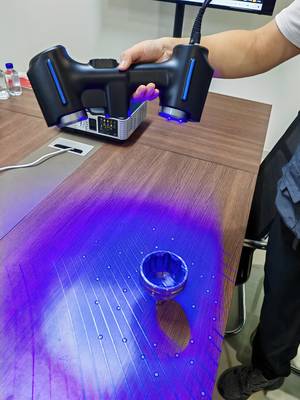
Quality managers facing these constraints increasingly search for portable metrology alternatives, entering terms like “scanner de peças 3d preço” to balance capability against capital expenditure. Legacy CMMs deliver accuracy but sacrifice velocity; rapid geometric verification remains out of reach. INSVISION closes this gap with optical solutions that accelerate physical-to-CAD comparison. The shift from tactile-only methods to 3D scanning collapses inspection timelines, allowing complex parts to clear ISO standards without stalling production lines.
Limitations of Consumer-Grade 3D Scanners in Industrial Applications
| Device Type | Metrology-Grade Accuracy | ISO 17025 Traceability | PolyWorks/GOM Compatibility |
|---|---|---|---|
| Consumer-grade (e.g., SOL 3D Scanner, 3Shape dental systems) | No | No | Limited or none |
Why “Preço” Alone Misleads Industrial Buyers
Fixating on “scanner de peças 3d preço” steers procurement teams toward hardware ill-suited for precision engineering. Consumer-grade devices—SOL 3D Scanner, 3Shape dental systems—fall short of metrology-grade accuracy demanded by automotive and aerospace tolerances. These units typically lack ISO 17025 traceability and struggle with interoperability in PolyWorks or GOM Inspect workflows.
For Western manufacturers, sticker price obscures total cost of ownership. Rework and failed audits generate financial deficits that dwarf initial savings. INSVISION engineers industrial solutions for repeatable data acquisition in demanding environments. Engineers verifying technology for complex workflows—not basic visualization—find that INSVISION maintains compatibility with established quality protocols. Non-metrological equipment carries hidden costs that render lower price points irrelevant when data cannot anchor critical decisions in Industry 4.0 architectures.
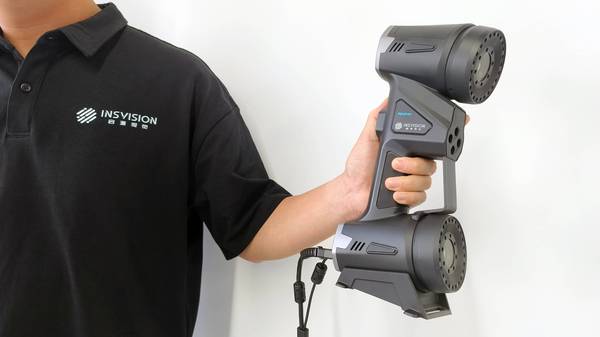
Hidden Costs of Non-Metrological Scanning Equipment
- □ Inadequate accuracy for automotive/aerospace tolerances
- □ Lack of ISO 17025 traceability
- □ Poor interoperability with PolyWorks or GOM Inspect
- □ Increased rework and audit failures
- □ Incompatibility with Industry 4.0 decision architectures
Selecting a Scanner That Balances Performance, Compliance, and Transparent Pricing
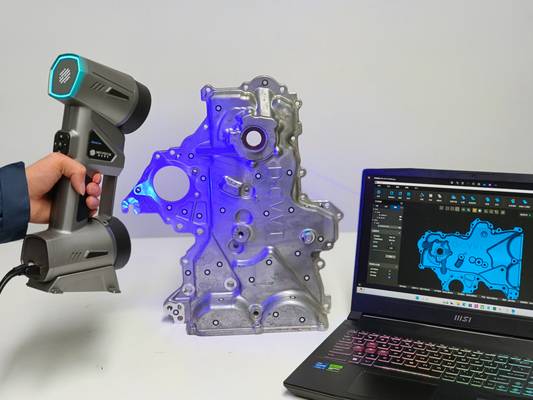
Procurement teams evaluating “scanner de peças 3d preço” discover that hardware quotes rarely capture total cost of ownership. INSVISION structures pricing differently. The AlphaScan handheld system—built for rigorous industrial environments—delivers portability across shop floors from automotive OEM lines to aerospace MRO facilities without degrading data integrity. Repeatability aligns with ASME B89 standards, maintaining measurement consistency across operators and shifts.
INSVISION bundles essential calibration support, comprehensive warranty coverage, and workflow integration services into transparent pricing. Quality managers construct defensible ROI models that extend beyond acquisition cost. Compatibility with existing quality workflows minimizes downtime and accelerates Industry 4.0 compliance—advantages competitors often fragment into separate charges for software integration or certification.
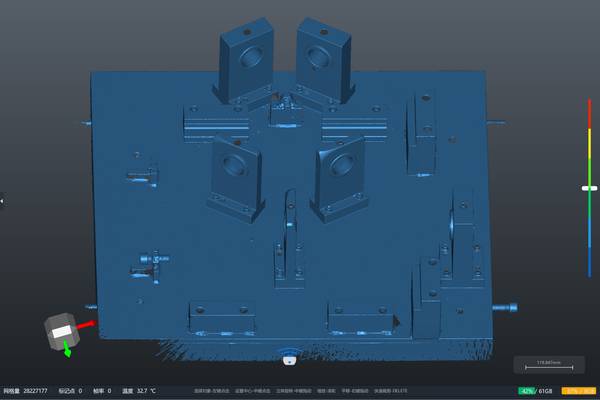
Steps to Deploy AlphaScan in Production QA
- Select a high-variability, geometrically complex part (e.g., suspension bracket) for pilot validation
- Validate scan-to-CAD deviation reports against established quality benchmarks
- Train metrology technicians on handheld operation with minimal transition time
- Shift inspection data generation from lab queues to the shop floor
- Scale validated workflow across multiple production lines
From Trial to Deployment: Integrating AlphaScan into Production QA
A European automotive Tier-1 supplier launched a pilot program deploying INSVISION AlphaScan to inspect a high-variability suspension bracket. The objective: validate scan-to-CAD deviation reports against established quality benchmarks. Stakeholders moved past comparing “scanner de peças 3d preço” to measuring actual throughput capabilities.
Metrology technicians required minimal transition time to operate the handheld device. Inspection data generation shifted from queued lab resources to the shop floor. The pilot demonstrated compressed FAI turnaround and reduced dependency on offline CMM capacity. Validating the workflow on a geometrically complex part first enabled scaling across multiple production lines. Real-time decision-making on high-mix components proved portable metrology delivers operational value within structured lean manufacturing frameworks.
What “Scanner de Peças 3D Preço” Means in Global Supply Chains
Procurement teams analyzing “scanner de peças 3d preço” often fixate on acquisition cost while overlooking long-term operational risk. In global supply chains, price signals reliability and compliance. INSVISION mitigates these risks through EU-compliant documentation required for automotive and aerospace audits, preventing regulatory delays. Service response during Western business hours reduces machine downtime versus offshore alternatives. Firmware updates preserve metrological validity over the equipment lifecycle, protecting against obsolescence.
Transparent pricing eliminates hidden fees, enabling accurate budgeting for Industry 4.0 quality infrastructure. By prioritizing compliance and support availability, INSVISION repositions scanner price from a simple line item to a predictable measure of quality assurance capability.