The Hidden Cost of Noisy Mesh Data in Quality Control
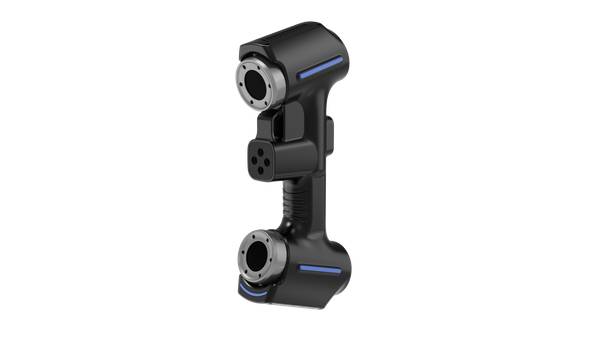
Procurement teams often anchor their 3D scanner evaluations to upfront hardware costs, treating the purchase as a commodity decision. The real financial impact, however, surfaces downstream. Low-precision equipment generates noisy mesh data that fails ISO/ASME geometric tolerancing checks, triggering repeated scans and hours of manual cleanup. In automotive and aerospace supply chains, this bottleneck delays first-article inspections and inflates labor costs. A device that outputs a clean scanner STL file immediately carries more value than a cheaper unit demanding extensive post-processing. INSVISION closes this efficiency gap with metrology-grade hardware like the AlphaScan, delivering 0.020 mm accuracy at 7.1 million measurements per second. The result: scanner STL data that is inspection-ready on first capture, eliminating hidden labor costs from fragmented data capture and accelerating metrology investment returns.
Where Legacy Scanning Workflows Create Bottlenecks
Digital twin integration and on-demand reverse engineering have exposed costly friction in traditional scanning setups. Older CMM-based systems and first-generation laser scanners often require 30–45 minutes of calibration before capturing a single point. That overhead compounds quickly across first-article inspections or MRO assessments with tight turnaround contracts.
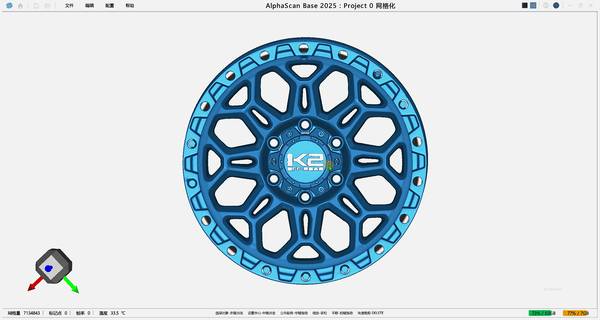
The constraint extends beyond hardware speed. Many systems output proprietary formats requiring manual conversion, turning the scanner-to-STL pathway into a blockage rather than a bridge. For procurement teams calculating total cost of ownership, these hidden labor hours matter. INSVISION removes this friction: the AlphaScan exports native STL, PLY, and TXT formats without intermediate processing, delivering 7.1 million measurements per second at 0.020 mm accuracy. At 1,070 g, the unit moves between work cells and field sites without recalibration overhead—critical when quality teams support multiple production lines or off-site aerospace MRO operations. The ROI calculation hinges not on purchase price, but on how quickly raw geometry becomes usable data for downstream systems.
AlphaScan vs. Legacy Scanners: Workflow Efficiency Comparison
| Feature | INSVISION AlphaScan | Legacy Scanners |
|---|---|---|
| Calibration Time | No recalibration needed between sites | 30–45 minutes per session |
| Output Format | Native STL, PLY, TXT | Proprietary formats requiring conversion |
| Measurements per Second | 7.1 million | Significantly lower |
| Weight | 1,070 g | Heavier, causing operator fatigue |
AlphaScan: Metrology-Grade STL Generation on the Shop Floor
INSVISION designed the AlphaScan to eliminate data conversion bottlenecks, outputting native scanner STL files ready for inspection software. For procurement managers calculating total cost of ownership, the operational math is direct: 7.1 million measurements per second compresses cycle time on the shop floor. The 0.020 mm single-point accuracy satisfies strict GD&T callouts for automotive and aerospace components without fixed infrastructure requirements. At 1,070 g, the ergonomic build reduces operator fatigue across long shifts—a practical factor often underestimated until productivity metrics slip. Because the AlphaScan handles high-fidelity STL generation natively, teams avoid secondary software licenses and manual mesh repair. This plug-and-play capability integrates into existing quality workflows, allowing engineers to concentrate on defect analysis rather than file formatting.
Operational Gains: Labor, Throughput, and Data Integrity
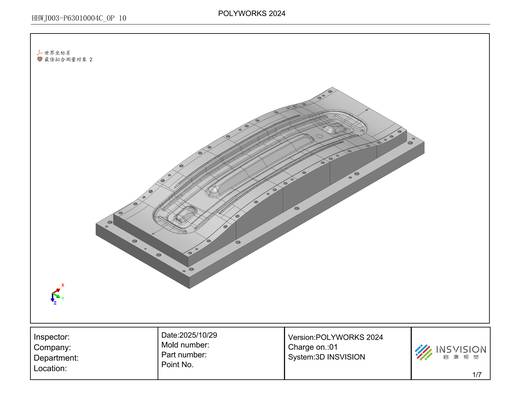
Manufacturing facilities are recalibrating quality control budgets as Industry 4.0 traceability mandates tighten across automotive and aerospace supply chains. For procurement teams evaluating scanner STL output capabilities, the INSVISION AlphaScan delivers measurable advantages that compound across the equipment lifecycle.
The 1,070 g lightweight design addresses a persistent constraint: operator fatigue during extended scanning sessions. Production managers report sustained productivity when technicians complete full-shift operations on large assemblies without the arm strain typical of heavier metrology hardware. At 7.1 million measurements per second across a 650 mm × 550 mm scan area, the scan-to-STL workflow for medium-to-large components compresses significantly—essential when throughput targets demand same-day inspection reports on castings or welded structures.
Data integrity further reduces hidden costs. INSVISION holds CE, FCC, and CNAS L2865 certifications, meaning STL and PLY outputs meet recognized metrology standards without downstream validation or manual cleanup. For procurement teams calculating total cost of ownership, this eliminates labor hours typically consumed by post-processing errors—a line item rarely visible in vendor quotes but consistently eroding project margins.
Deployment Speed in High-Mix Industrial Environments
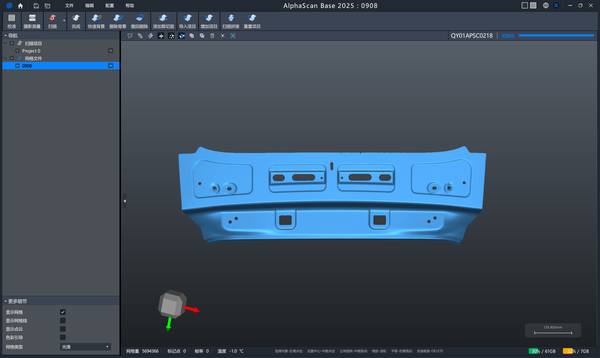
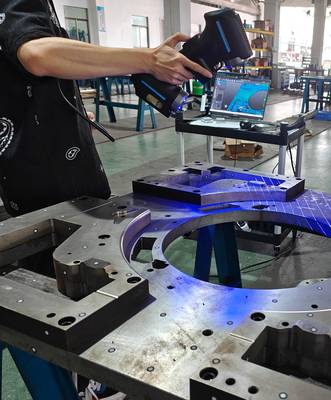
How quickly can a team move from unboxing to production data? This is the question procurement teams should prioritize when evaluating a scanner STL workflow. INSVISION engineered the AlphaScan for rapid deployment—no specialized workstations required. The system runs on standard Windows 10+ machines with Intel i7-13700H+ processors, 32 GB RAM, and 8 GB VRAM, specifications common in most facilities.
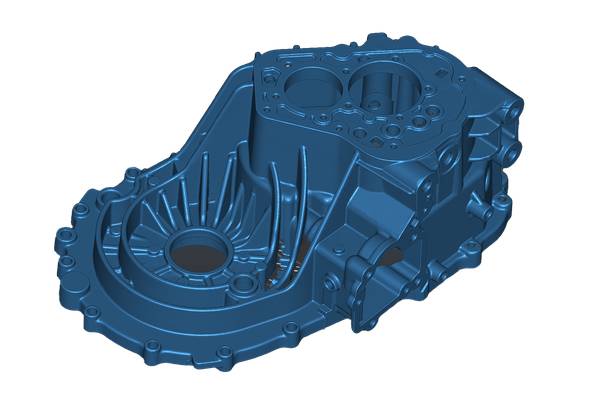
Training overhead remains minimal. Operators perform dimensional verification, wear assessment, and first-article inspection within hours, not weeks. The 1,070 g handheld unit outputs directly to STL, PLY, and TXT formats, feeding existing quality management systems without conversion delays.
For automotive OEMs executing GD&T callouts, aerospace MRO teams tracking component wear, or renewable energy contractors inspecting large castings, the ROI case is direct. Field-tested from −10°C to 40°C, the AlphaScan operates in shop floor conditions where lesser equipment falters. At 0.020 mm metrology-grade accuracy with 7.1 million measurements per second, INSVISION delivers industrial performance without the integration overhead that inflates total cost of ownership for scanner STL workflows.
Key Advantages Driving Total Cost of Ownership Reduction
- Native STL, PLY, and TXT export eliminates post-processing
- 7.1 million measurements per second accelerates inspection cycles
- 1,070 g weight reduces operator fatigue during extended use
- CE, FCC, and CNAS L2865 certifications ensure data integrity without validation
- Rapid deployment on standard Windows 10+ workstations minimizes IT overhead