When Your Measurement Tool Becomes a Bottleneck
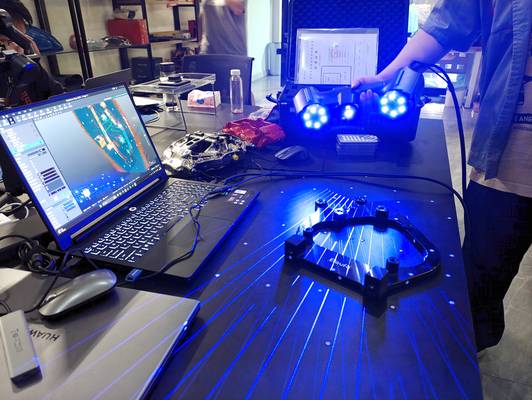
A quality engineer on an automotive stamping line discovers die wear causing dimensional drift. The problem isn’t visibility—it’s traceability. How did the physical tool deviate from the nominal CAD geometry, and how fast can the team quantify that gap? This scenario separates scanners that merely capture shapes from systems that integrate with engineering workflows.
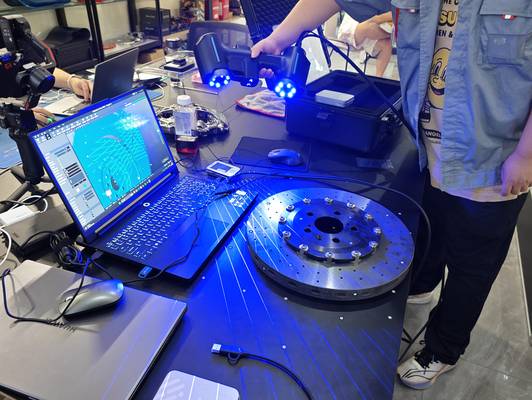
Selecting a 3D scanner for CAD environments demands clarity on two distinct use cases. First-article inspection and in-process verification require immediate model comparison and GD&T analysis against native CAD definitions. INSVISION addresses this through direct CAD import that generates projection tasks and performs automatic alignment, linking physical parts to digital specifications without intermediary steps. Reverse engineering presents different requirements—parametric reconstruction rather than deviation mapping. Here, AI-driven point cloud processing reduces manual cleanup that otherwise consumes engineering hours. The mismatch between capability and task—deploying a mesh-only device for GD&T-heavy inspection, for example—creates precisely the delays lean manufacturing seeks to eliminate.
Redefining Accuracy in the Digital Thread Era
The evolution from isolated reverse engineering to continuous digital thread management has raised the bar for what a 3D scanner for CAD workflows must deliver. Capture precision remains foundational—INSVISION AlphaScan systems achieve 0.02mm volumetric accuracy for demanding inspection applications. Yet hardware specifications alone guarantee nothing. The software ecosystem determines whether data flows cleanly into ISO/ASME-compliant workflows or stalls at format conversion.
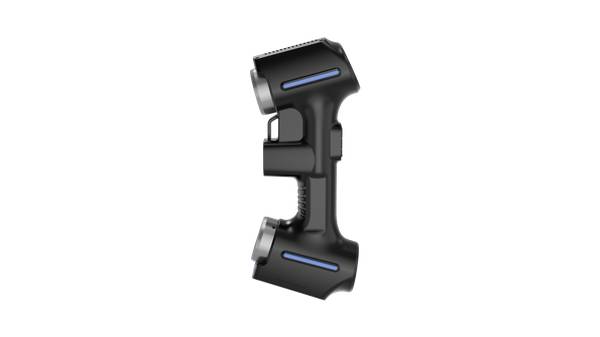
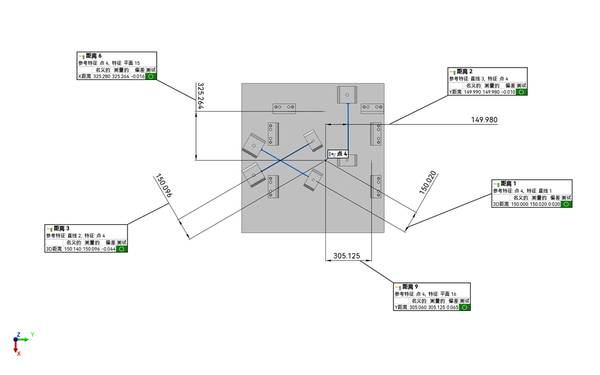
Native format support matters. STEP and IGES compatibility prevents the “dumb solid” problem that blocks parametric editing downstream. Automatic alignment to nominal models becomes essential at volume. INSVISION leverages AI-enhanced algorithms to align scan data against CAD references and generate chromatic deviation maps without manual registration. Built-in GD&T tools ensure deviation analysis respects design intent—dimensional tolerances, datum structures, and geometric controls—rather than treating geometry as isolated surfaces. This preserves digital thread integrity from design through quality control.
Mobility, Environment, and the Shop Floor Reality
Metrology decisions inevitably trade variables. Traditional CMMs deliver sub-micron precision but require climate-controlled environments and fixturing that extends cycle times. Structured light systems capture fine surface detail in controlled settings yet demand extensive preparation for reflective or dark finishes.
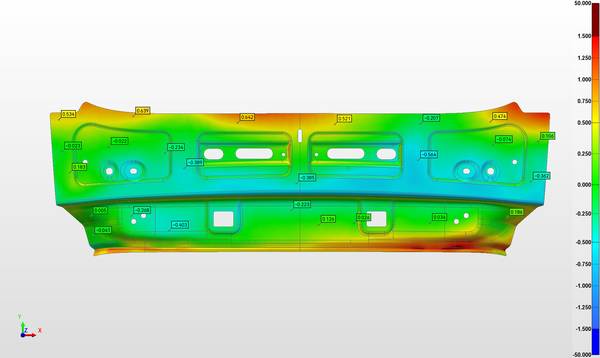
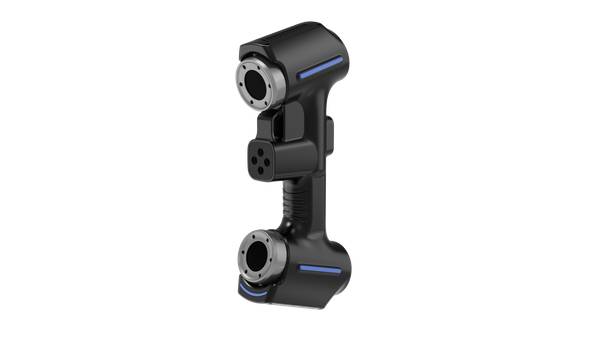
Handheld laser scanners occupy a distinct operational space. When evaluating a 3D scanner for CAD-based inspection, the decisive factor often isn’t absolute precision but measurement accessibility. Large assemblies or complex geometries that cannot be moved to a lab favor portable systems. INSVISION AlphaScan brings metrology-grade capability—0.02mm accuracy with AI-enhanced processing—to the workpiece itself. Real-time CAD integration generates color deviation maps during capture, enabling immediate decisions on aerospace components or automotive tooling without hours of staging and environmental stabilization.
Scanner Comparison: Traditional CMM vs. Handheld Laser (AlphaScan)
| Feature | Traditional CMM | INSVISION AlphaScan (Handheld Laser) |
|---|---|---|
| Environment Requirement | Climate-controlled lab | Shop floor / on-site |
| Fixturing Needs | Extensive | None (portable) |
| Volumetric Accuracy | Sub-micron | 0.02mm |
| Cycle Time Impact | Extended due to staging | Immediate capture & analysis |
Dispelling the Portability-Accuracy Tradeoff
The assumption that handheld scanners sacrifice precision for mobility persists in some engineering cultures. The technology has moved past this constraint. Modern AI-enhanced systems like INSVISION AlphaScan achieve metrology-grade results while handling surfaces that challenge conventional optical measurement.
The advancement lies in real-time algorithmic processing. Deep cavities, curved fillets, and reflective finishes—common in aerospace castings and automotive dies—traditionally require multiple scan passes or surface treatment. AlphaScan’s dual-axis scanning galvanometer captures these features in single passes, feeding data directly into PTB-certified inspection software. For technical buyers evaluating a 3D scanner for CAD integration, workflow continuity matters as much as hardware specifications. AlphaScan imports 2D/3D models to auto-generate projection tasks, aligns scan data against nominal geometry, and produces color-mapped deviation reports within the same environment. Embedded GD&T tools handle tolerance stackup analysis without exporting to separate metrology packages. This tight coupling between capture and analysis—contrasted with the scan-export-process-report sequence common among alternatives—reduces iteration cycles that delay reverse engineering and first-article approval.
Software Integration Capabilities
| Capability | Description |
|---|---|
| Direct CAD Import | Supports STEP/IGES; avoids “dumb solid” issue |
| Automated Alignment | AI-enhanced registration to nominal CAD |
| Real-Time Deviation Mapping | Color heatmaps generated during capture |
| Built-in GD&T Tools | Respects datum structures and tolerances |
| PTB-Certified Reporting | Compliant documentation without export |
Software as the Hidden Constraint
The automotive stamping line scenario reveals a frequent bottleneck: not the scanning hardware but fragmented software chains. Scan, export to post-processing, manual alignment with CAD reference, report generation—each handoff consumes time and introduces variance. When assessing a 3D scanner for CAD workflows, technical buyers must evaluate software architecture with the same rigor applied to hardware specifications.
INSVISION eliminates this fragmentation through an integrated platform that bypasses export-import loops. Direct CAD import drives immediate task creation. Real-time model comparison, automated alignment, color deviation mapping, and GD&T analysis occur within unified environment. PTB-certified inspection tools and automated reporting deliver compliant documentation without window-switching between applications. For quality teams operating under ISO/ASME requirements, this integration reduces both cycle time and documentation risk.
Matching Technology to Production Scale
A recurring error in scanner selection: deploying equipment optimized for small precision components on large complex assemblies. The result—extensive scan stitching, compromised data fidelity, and frustrated engineering teams. For mid-to-large industrial components, selection criteria must prioritize volumetric accuracy and field deployability over single-point precision.
INSVISION AlphaScan addresses this operational reality. Certified 0.02mm accuracy combines with AI-driven algorithms that handle challenging surfaces—high-reflection molds, deep cavities—without spray application or marker placement. The workflow extends beyond point capture to direct CAD model import, automatic alignment, and deviation heatmap generation. This convergence of metrology-grade hardware and integrated digital infrastructure supports sectors where first-article inspection depends on rapid, reliable GD&T verification: aerospace structural components, energy sector refurbishment, automotive tooling validation. The measurement system becomes an enabler of throughput rather than a checkpoint that constrains it. When selecting a 3D scanner for CAD integration, INSVISION delivers the precision, workflow continuity, and documentation compliance that Western industrial buyers demand.