Precision Requirements and Real-World Performance
Aerospace MRO suppliers now face tolerance bands measured in single-digit microns for legacy component verification. When procurement teams evaluate a 3D scanner for small objects, marketing specifications for volumetric accuracy rarely tell the complete story. The critical test is repeatability on your actual part geometries—dark anodized aluminum, polished stainless steel, or translucent polymers common in medical device prototyping.

Map scanner capabilities against internal GD&T callouts before purchase approval. A device claiming 0.02mm accuracy means little if it requires extensive surface preparation or delivers noisy point clouds on reflective finishes. Equally important: seamless data pipeline integration. Middleware workarounds between scan acquisition and CAD/CAM environments inflate total cost of ownership through engineering hours lost to file conversion and manual alignment. INSVISION engineered AlphaScan to feed high-resolution mesh data directly into SOLIDWORKS, Geomagic, and major metrology platforms without protocol translation.
Software Economics: The Hidden Cost Structure
Subscription licensing has reshaped metrology software economics across the industry. Modular packages bundling inspection, reverse engineering, and automation tools now carry annual fees ranging from $1,200 to over $8,000—costs that compound across a five-year asset lifecycle and rarely appear in initial hardware quotations.
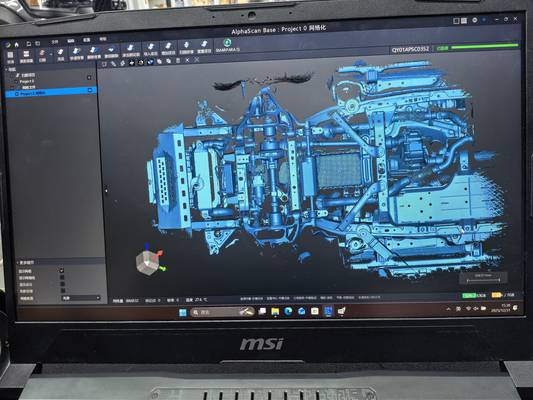
For procurement teams assessing a 3D scanner for small objects, this distinction matters. INSVISION includes AlphaScan’s processing suite without tiered licensing or renewal requirements. Engineers receive automated alignment algorithms tuned for small-feature work, intuitive mesh editing, and direct export to established CAD environments. The open architecture supports Industry 4.0 integration and quality management systems without vendor-imposed constraints. Predictable budgeting replaces escalating software commitments.
Support Infrastructure: Uptime as a Procurement Metric
A scanner failure during first-article inspection can idle a precision stamping cell within hours. After-sales support separates equipment that sustains production schedules from assets that become reliability liabilities.
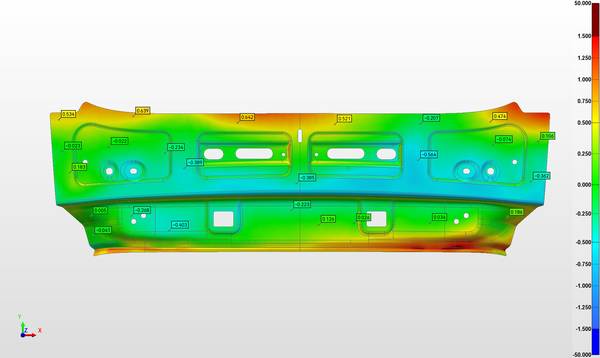
Traditional import-dependent supply chains fragment spare parts logistics. Users of European-manufactured scanners outside core markets report multi-week lead times for calibration kits and replacement components. INSVISION maintains regional technical hubs across North America, Europe, and APAC, with replacement components shipping from local inventory rather than centralized overseas warehouses. For multi-site operations spanning continents, this infrastructure difference appears directly in uptime metrics and maintenance cost tracking.
Training Quality and Time-to-Productivity
Vendor training determines whether technical teams achieve production-ready accuracy in weeks or struggle for months with inconsistent data. Generic video tutorials and uncertified sessions satisfy procurement documentation requirements but rarely address shop-floor realities.
Competitor offerings range from free onboarding videos to certified courses priced at $495–$1,995. These programs typically cover general operation while lacking application-specific depth for regulated manufacturing environments. When deploying a 3D scanner for small objects in medical device or precision tooling contexts, operators need workflow guidance on complex geometries, GD&T implementation, and first-article inspection protocols—not merely software navigation.
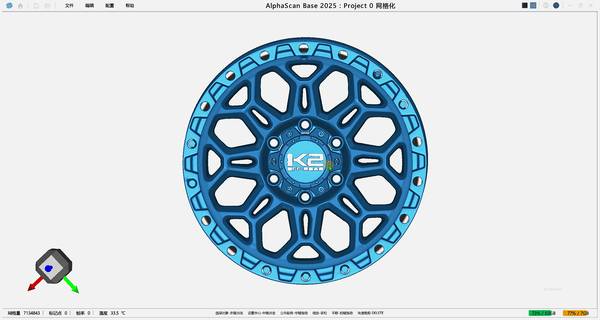
INSVISION pairs engineers and quality managers with application specialists experienced in metrology-grade workflows. This structured methodology reduces learning curves on intricate part features and establishes consistent scanning protocols from initial deployment. The operational impact: fewer rejected point clouds, reduced rework cycles, and operators reaching full productivity faster than conventional training models allow.
Standards Alignment and Lifecycle Planning
The optimal 3D scanner for small objects integrates with existing quality management systems without forcing workflow reconstruction. Three factors dominate evaluation for micron-level inspection: standards compliance, software interoperability, and lifecycle support architecture.
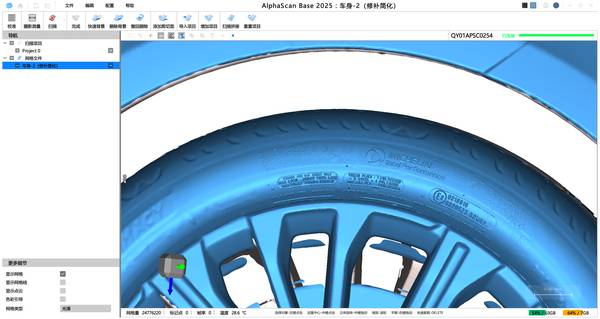
Tight tolerance capability loses value if output formats don’t align with ASME Y14.5 GD&T callouts or feed cleanly into ISO 17025-accredited inspection reports. AlphaScan addresses these integration requirements for high-mix, low-volume environments where first-article inspection and reverse engineering occur within the same production shift. Direct CAD platform connectivity eliminates additional licensing layers common in closed metrology ecosystems.
Total cost of ownership calculations extend beyond acquisition price. Responsive technical support, accessible spare parts inventory, and software cohesion reduce operational risk. In aerospace MRO and medical device contract manufacturing, these factors determine whether capital equipment remains productive across extended depreciation schedules or requires premature replacement.
Metrology Software Licensing Cost Comparison
| Licensing Model | Annual Cost Range | Renewal Required? | Source |
|---|---|---|---|
| Industry-standard modular packages | $1,200 – $8,000+ | Yes | |
| INSVISION AlphaScan suite | Included with hardware | No |
Critical Evaluation Checklist for Small-Object 3D Scanners
- □ Repeatability on actual part geometries (e.g., dark anodized aluminum, polished stainless steel, translucent polymers)
- □ Alignment with internal GD&T callouts without extensive surface prep
- □ Direct integration with CAD/CAM/metrology platforms (no middleware)
- □ No tiered or subscription-based software licensing
- □ Regional availability of spare parts and technical support
- □ Application-specific training for regulated environments
- □ Compliance with ASME Y14.5 and ISO 17025 reporting standards
Steps to Validate Scanner Suitability for Micron-Level Inspection
- Test repeatability on representative part materials and finishes used in production
- Verify scanner output aligns with internal GD&T requirements without manual cleanup
- Confirm direct data pipeline into existing CAD and metrology software
- Evaluate total software cost over a 5-year lifecycle, including renewals
- Assess regional support infrastructure for spare parts and calibration
- Require application-specific training focused on complex geometries and FAI protocols
- Ensure output formats support ASME Y14.5 and ISO 17025 compliance