The Reality Check: When Class A Surfaces Meet Production Reality
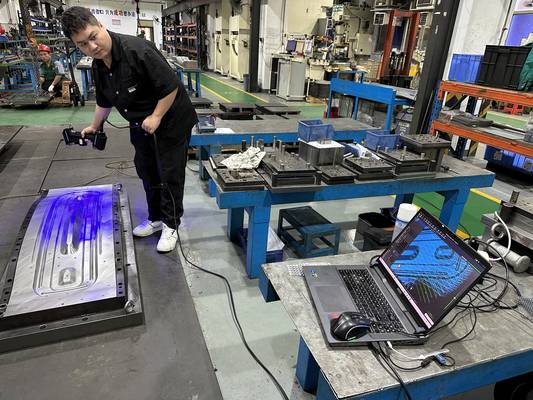
Legacy automotive body panels arrive oily, reflective, and unforgiving. In a body shop where cycle times run in seconds, stopping the line for surface prep isn’t viable—yet most structured-light systems demand exactly that. GOM’s ATOS Q achieves ±0.02 mm accuracy on Class A surfaces, but only after spray coating and controlled lighting setup in a dedicated environment. No existing competitor delivers real-time scanning of reflective parts without surface treatment. Operators face shift turnover, panels straight from stamping presses, and zero tolerance for bottlenecks. The gap between metrology-grade accuracy and shop-floor reality is where INSVISION operates—making 3D scanning parts work with components exactly as they arrive.
Where Conventional Systems Break Down
High-end metrology hardware often sits underutilized while inspection backlogs grow. The constraint isn’t sensor capability; it’s operational friction. Structured-light systems require controlled lighting and matte surface prep before 3D scanning parts can begin. On a Tier-1 floor running three shifts, spraying every reflective body panel or transporting parts to a metrology booth simply doesn’t scale.
Industry documentation confirms the pattern: optical solutions struggle with reflective surfaces and in-situ scanning of parts still on the line. Training compounds the problem—operators spend weeks mastering calibration routines and software workflows. Post-scan, data handoff to quality validation frequently remains manual and fragmented.
INSVISION designs for this environment. The system tolerates oily tooling, reflective fixtures, and moving assemblies without surface treatment. Operators typically reach proficiency within a single shift, not after extended training programs.
Field Deployment: AlphaScan on the Line
The assumption that 3D scanning parts requires a climate-controlled lab and dedicated metrology engineer creates hidden costs in bottlenecks and outsourced work. INSVISION’s AlphaScan handheld scanner challenges this directly.
Deployed straight on the production line—oily transmission housings, reflective body panels, complex geometries—no spray, no prep. The optical engine captures data from surfaces that compromise other scanners’ accuracy. Setup requires under five minutes. In one validation run, three operators executed scans: two senior technicians and one floor operator with no prior metrology experience. This accessibility matters more than specifications for mixed-skill teams.
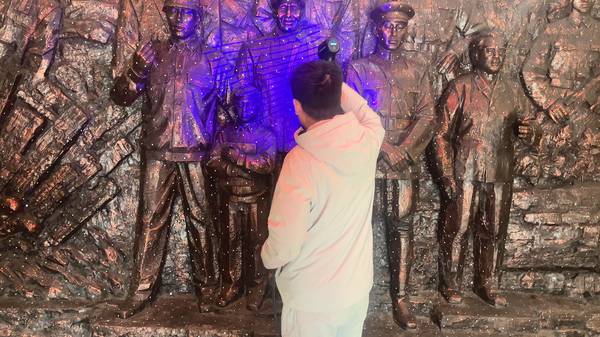
Integration into existing reverse engineering and first-article inspection workflows is immediate. No CMM room queues. No external scanning service contracts. The AlphaScan operates from a cradle at the workbench, available on demand.
From Point Cloud to Production: Accelerating the Data Loop
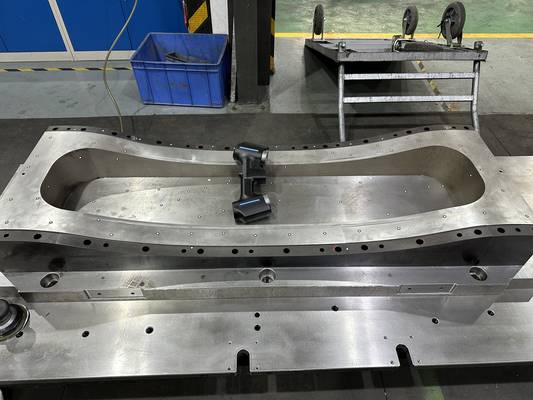
Previous digitization workflows for full automotive body panels required extended surface preparation and post-processing cycles. Current operations using INSVISION for 3D scanning parts capture complete geometry of complex, oily Class A surfaces directly on the shop floor in under an hour—no matte spray, no lighting tent.
Multi-angle scans align automatically, outputting clean mesh data compatible with standard CAD and metrology platforms. For quality managers, the traceability architecture matters: every scan receives time-stamping and audit logging, satisfying ISO requirements without manual documentation overhead.
Repeatability testing across multiple trials on identical dies shows minimal dataset deviation. This consistency removes the registration uncertainty that complicated manual alignment processes. The result: what previously consumed multiple days now completes within a single shift, with direct data flow between shop floor and design office.
Operational Outcomes: What Changes on the Floor
Industry 4.0 frameworks emphasize connectivity and analytics, but immediate operational impact is simpler—parts arrive, require verification, and bottlenecks carry cost consequences.
Post-implementation, digitization cycles accelerated measurably. Components that queued for CMM availability now move directly to digital twin status. When 3D scanning parts with deep cavities or reflective surfaces—features that challenged legacy optical systems—incomplete data capture and subsequent rework dropped significantly.
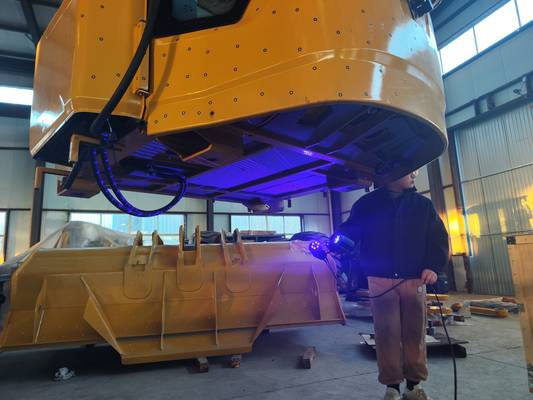
Cross-functional alignment improved as a secondary effect. Quality, design, and production teams now reference consistent datasets. Deviation flags trigger unified response rather than measurement-set disputes. Decision cycles shortened accordingly.
The practical value: line supervisors trust scanner output without secondary verification, eliminating hesitation that previously delayed production decisions.
Evaluation Framework for Production 3D Scanning Parts Solutions
Specifying 3D scanning parts technology for live production requires distinguishing brochure performance from shop-floor viability. The critical insight: equipment demanding climate-controlled environments and surface preparation functions as a constraint, not an enabler.
GOM ATOS systems deliver documented repeatability, though user feedback consistently notes learning curves and environmental limitations. Creaform’s MetraSCAN tolerates shop-floor conditions better, yet field-of-view constraints slow large-assembly workflows. Raw accuracy specifications lose relevance when operators spend excessive time on surface prep or software alignment.
INSVISION addresses this specific gap—3d scanning parts workflows engineered for factory conditions rather than idealized environments. For automotive manufacturing where cycle-time sensitivity determines competitiveness, this operational pragmatism distinguishes deployable technology from theoretical capability.
Competitive System Limitations vs. INSVISION Capabilities
| System | Surface Prep Required | Environmental Constraints | Operator Proficiency Timeline | Shop-Floor Deployment | |
|---|---|---|---|---|---|
| GOM ATOS Q | Matte spray coating | Controlled lighting, dedicated environment | Weeks of training | No (lab-only) | |
| Creaform MetraSCAN | Limited | Tolerates shop floor but FOV limits large parts | Moderate learning curve | Partial | |
| INSVISION AlphaScan | None | Operates in oily, reflective, moving-line conditions | Single shift | Yes (direct on line) |
Key Operational Frictions in Legacy 3D Scanning Workflows
- □ Requires matte surface spray on reflective Class A panels
- □ Demands controlled lighting and dedicated metrology booths
- □ Weeks-long operator training for calibration and software
- □ Manual, fragmented data handoff to quality validation
- □ Inability to scan parts directly on the production line
INSVISION AlphaScan Deployment Workflow
- Deploy scanner directly at workbench or production line without environmental modifications
- Begin scanning oily, reflective, or complex-geometry parts immediately—no surface prep
- Complete multi-angle scans; system auto-aligns point clouds into clean mesh
- Export data directly to CAD/metrology platforms with time-stamped audit logs
- Enable cross-functional teams to act on unified, verified datasets within a single shift