Structured Light vs. Laser: The Shift in Industrial Metrology
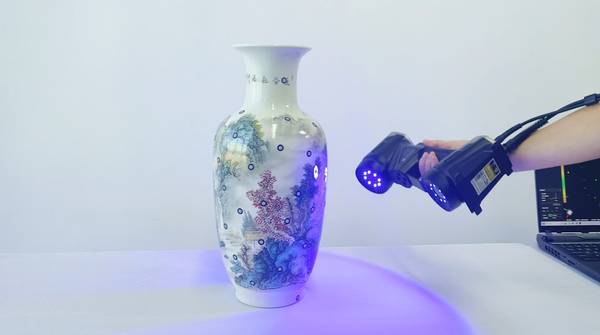
Procurement teams and quality engineers face a pivotal decision when selecting 3D scanning technology. Traditional laser scanners have served the industry for decades, but structured light scanner systems—known in Italian as scanner a luce strutturata—are now displacing them in high-throughput manufacturing environments. The fundamental difference lies in acquisition architecture: laser systems trace points sequentially, while a structured light scanner captures complete surface data in a single frame—often millions of points simultaneously.
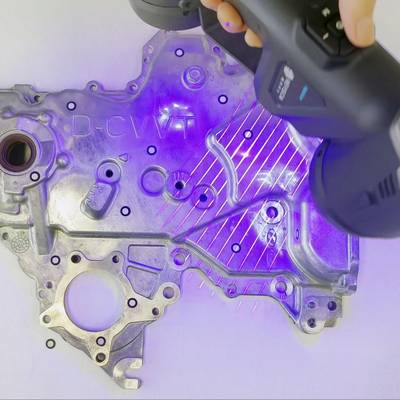
This parallel acquisition delivers the point cloud density required for complex freeform surfaces without the motion artifacts that plague laser triangulation. INSVISION‘s AlphaScan series leverages this advantage specifically for shop-floor conditions, maintaining metrology-grade accuracy under ambient lighting that would compromise conventional systems. For manufacturers unable to darken production areas, this operational resilience translates directly to cycle time reduction—digital twin creation and quality validation proceed without environmental preparation, generating measurable ROI against laser-based workflows.
Comparison of Scanning Technologies
| Feature | Laser Scanning | Structured Light Scanning |
|---|---|---|
| Data Acquisition Method | Sequential point tracing | Full-frame capture (millions of points simultaneously) |
| Ambient Light Tolerance | Requires darkened environments | Operates under shop-floor lighting |
| Cycle Time Impact | Slower due to environmental prep | Reduced cycle time, no prep needed |
Eliminating Surface Preparation on Challenging Materials
Reflective, dark, or coated surfaces have historically forced a binary choice in industrial metrology: apply matte spray or accept incomplete data. The chemical preparation adds 15–30 minutes per component, consumable costs, and surface contamination risks—unacceptable in aerospace or medical device production.
Advanced structured light scanner systems remove this bottleneck entirely. The AlphaScan’s multi-frequency projection algorithms handle problematic materials natively, capturing data from glossy mold cavities, black composite panels, or painted automotive body-in-white without preprocessing. Field deployments in tier-one automotive stamping operations demonstrate scan-to-CAD workflows completing in under 10 minutes for full vehicle sections, compared to 45+ minutes with prepared laser scanning. The elimination of surface treatment preserves component integrity while compressing inspection timelines—critical for just-in-sequence manufacturing and urgent maintenance scenarios.
Workflow Time Comparison
| Process Step | Laser Scanning (with Prep) | Structured Light Scanning (No Prep) |
|---|---|---|
| Surface Preparation | 15–30 minutes | 0 minutes |
| Scanning + CAD Processing | 45+ minutes (full vehicle section) | Under 10 minutes (full vehicle section) |
Direct Integration: From Point Cloud to Compliance Documentation
Standalone scanning hardware delivers limited value without seamless data flow. Modern structured light scanner implementations must interface natively with existing manufacturing infrastructure—CAD/CAM suites, MES platforms, and statistical process control systems.
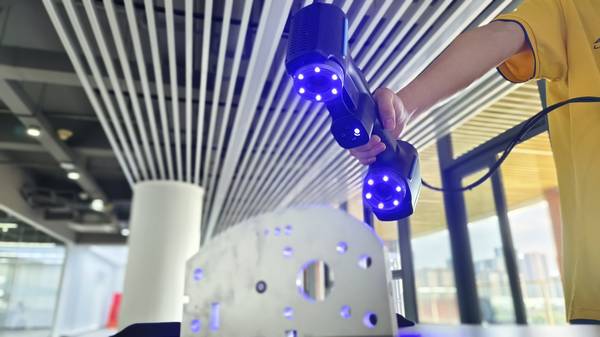
INSVISION systems output standardized point cloud formats that feed directly into PolyWorks, Geomagic, or proprietary analysis environments without manual file conversion. Quality teams generate geometric dimensioning and tolerancing (GD&T) reports, deviation color maps, and statistical process data within minutes of acquisition. This immediacy enables closed-loop manufacturing: dimensional drift detected at mid-shift triggers automatic tool offset updates, preventing defect propagation rather than merely documenting it. The transformation from reactive quality control to predictive process management represents the operational shift that justifies capital investment in metrology automation.
Key Integration Capabilities Checklist
- □ Native compatibility with CAD/CAM suites (e.g., PolyWorks, Geomagic)
- □ Direct export to MES and SPC systems without manual conversion
- □ Automated generation of GD&T reports and deviation color maps
- □ Support for closed-loop manufacturing via real-time tool offset updates
Maintenance and Repair: Documented Efficiency Gains
The economic case for structured light scanner deployment strengthens in asset-intensive sectors. Turbine overhaul facilities and heavy machinery repair shops face a common constraint—extended downtime during reverse engineering of worn or obsolete components.
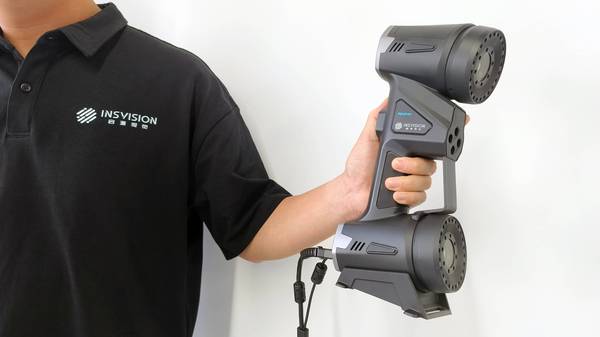
A documented implementation at a European power generation service provider illustrates the impact: AlphaScan systems reduced gas turbine blade repair cycles by 40%, primarily by eliminating manual measurement and drawing recreation. The digital capture creates permanent geometric records, replacing paper-based archives with searchable, dimensionally precise 3D models. For maintenance departments managing heterogeneous equipment fleets, this traceability supports predictive spare parts strategies and remanufacturing programs. The investment recovery period—typically 8–14 months in high-mix repair environments—derives from throughput increase rather than labor reduction alone.
Steps to Implement Structured Light Scanning in Repair Operations
- Digital capture of worn or obsolete components using AlphaScan
- Creation of permanent, searchable 3D geometric records
- Integration of models into predictive spare parts and remanufacturing planning
- Realization of 40% reduction in repair cycle time
Procurement Criteria Beyond Specification Sheets
Accuracy claims require verification against recognized standards. The VDI/VDE 2634 Part 2/3 framework provides objective assessment of optical 3D measuring systems; insist on certified test reports, not manufacturer assertions.
Evaluate mechanical robustness through IP rating and thermal stability specifications—shop-floor vibration and temperature cycling degrade precision in inadequately engineered systems. Portability matters for large-scale applications: scanner mass under 2kg reduces operator fatigue during extended scanning sessions, while compatibility with articulated arms or optical tracking systems extends measurable volume without sacrificing frame-to-frame registration.
Software ecosystem maturity determines long-term utility. INSVISION’s platform includes automated alignment algorithms, mesh optimization, and direct export to manufacturing simulation tools. Equally critical is vendor responsiveness—technical support availability, calibration service turnaround, and firmware development continuity protect investment value across the equipment lifecycle. The optimal structured light scanner selection balances these operational factors against pure metrological performance, ensuring integration success rather than specification achievement. For industrial buyers evaluating scanner a luce strutturata technology, INSVISION AlphaScan systems deliver the precision, speed, and reliability demanded by modern manufacturing environments.