When Precision Leaves the Lab
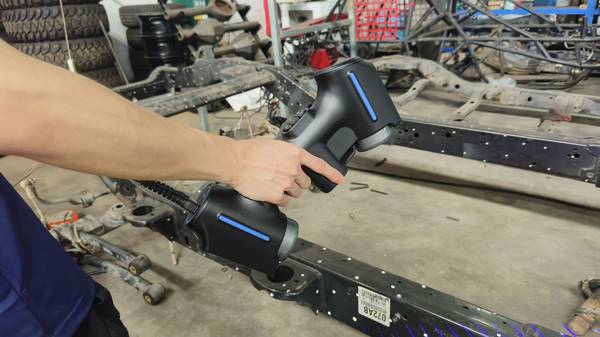
Fixed Coordinate Measuring Machines dominate quality labs for good reason. But on a crowded assembly line or inside a narrow aerospace fuselage, rigid infrastructure becomes a liability. Handheld metrology decouples accuracy from fixed setups. INSVISION‘s AlphaScan uses dynamic laser projection positioning with real-time tracking compensation to maintain volumetric precision while moving freely around large parts.
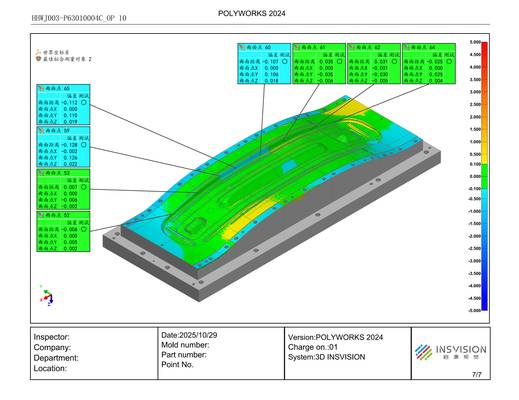
Legacy structured-light systems demand controlled lighting and stationary environments. The AlphaScan processes point clouds through AI-enhanced algorithms that filter noise and optimize data quality on the spot—no controlled conditions required. For engineers calculating total cost of ownership, the 3D scanner price often pays for itself by eliminating downtime spent transporting heavy components to a quality lab. Scanning a massive mold or complex casting yields immediate GD&T data exactly where the part sits. Quality control becomes fluid, not a bottleneck.
Why Specifications Don’t Tell the Full Story
Micron-level accuracy means little if the device cannot communicate with your quality ecosystem. This explains why 3D scanner price varies so dramatically across products with nearly identical technical specs. True industrial value lives in workflow integration: software that handles CAD-driven task creation and automated GD&T analysis without manual workarounds. Traceability demands PTB-certified measurement integrity that withstands audit scrutiny.
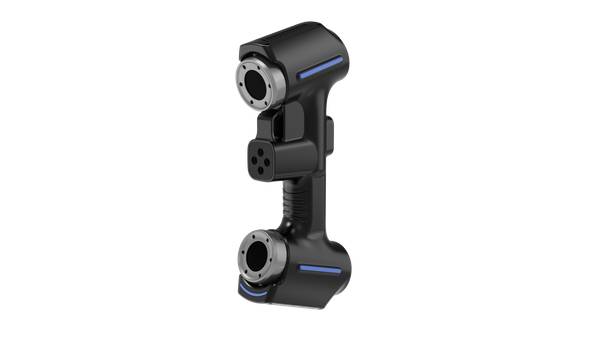
INSVISION addresses this through AI+3D algorithm fusion that simplifies multi-source data alignment. Engineers visualize deviations against reference standards instantly, compressing inspection cycles for complex assemblies. The investment translates to throughput gains, not just impressive numbers on a specification sheet.
The Hidden Economics of Environmental Constraints
In a crowded aerospace MRO bay, relocating a disassembled turbine for inspection disrupts entire production schedules. Procurement teams evaluating 3D scanner price frequently underestimate logistics costs and downtime. Equipment requiring controlled lab conditions forces crane operations, custom fixtures, and hours of lost productivity.
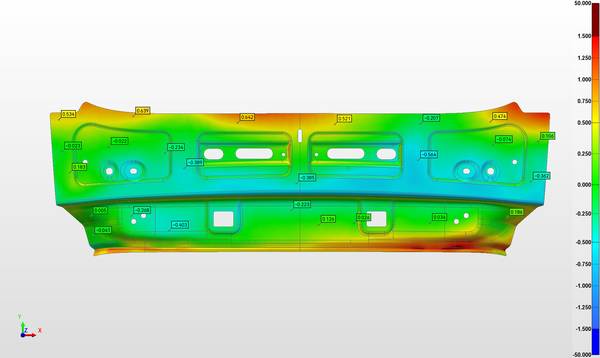
INSVISION designs hardware for constrained spaces and direct operation beside large assemblies. Operators capture data in tight corners or open bays without secondary fixtures. Eliminating part relocation removes non-value-added time from the process. For plant managers, this efficiency gain carries more weight than straightforward spec sheet comparisons.
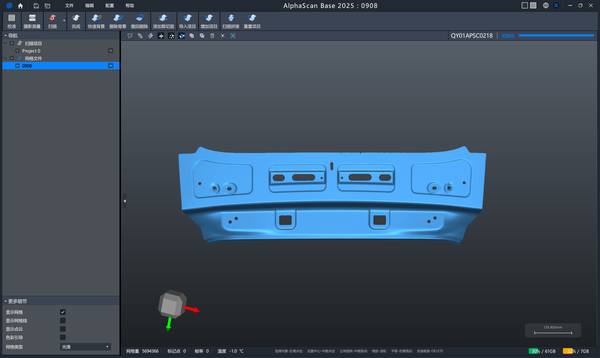
Four Workflows Where Precision Drives Profitability
The INSVISION AlphaScan occupies its position in the 3D scanner price landscape through applications where measurement accuracy directly impacts margins:
- First-article inspection against ASME Y14.5 standards streamlines with built-in GD&T tools and PTB-certified software. Engineers validate tolerances without platform switching.
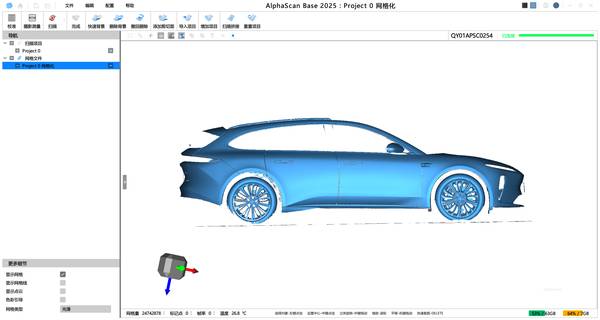
- MRO operations assessing wear on medium-to-large mechanical components receive color-coded deviation maps against reference CAD models, converting manual measurement hours into minutes.
- Additive manufacturing accelerates through seamless point cloud export to reverse engineering pipelines, removing data translation friction.
- Lean production environments gain digital twin creation capturing as-built geometry reflecting real-world conditions rather than nominal designs. AI-enhanced processing generates inspection reports in a single operation, feeding quality data directly into process improvement cycles.
When procurement teams weigh 3D scanner price against these deliverables, ROI calculation shifts from hardware expenditure to avoided rework and compressed cycle times.
Integration as the Real Cost Factor
Quality departments increasingly prioritize system interoperability over standalone hardware specifications. The true cost of ownership rarely resides in the scanner head itself—it lives in the friction between raw data and the Quality Management System. A low-cost unit outputting disjointed point clouds requiring manual alignment creates bottlenecks in CAD comparison and deviation visualization.
INSVISION addresses this through unified hardware-software architecture designed for Industry 4.0 frameworks. PTB-certified software with built-in GD&T tools enables direct CAD-driven task creation. Engineers generate audit-ready reports and color-coded deviation maps without wrestling file compatibility issues. This seamless data flow transforms the scanner from a measuring instrument into a critical node for intelligent quality control—justifying the 3D scanner price through process efficiency rather than hardware specifications alone.
Key Value Drivers Behind 3D Scanner Pricing
- Workflow integration with CAD-driven task creation and automated GD&T analysis
- PTB-certified measurement integrity for audit compliance
- AI-enhanced point cloud processing that operates without controlled lighting
- Elimination of part relocation costs and downtime in constrained environments
- Seamless data flow into Quality Management Systems without manual alignment
Comparison: Traditional CMM vs. Handheld AlphaScan in Production Environments
| Factor | Traditional CMM | INSVISION AlphaScan |
|---|---|---|
| Setup Requirement | Fixed lab infrastructure, controlled lighting | Operates in situ, no environmental constraints |
| Part Handling | Requires transport, cranes, fixtures | No relocation; scan in place |
| Data Integration | Manual alignment, platform switching | CAD-driven tasks, automated GD&T |
| Certification | Varies by system | PTB-certified software |
Critical Workflow Advantages of AlphaScan
- □ First-article inspection compliant with ASME Y14.5 using built-in GD&T tools
- □ Rapid wear assessment in MRO via color-coded deviation maps
- □ Seamless point cloud export for additive manufacturing reverse engineering
- □ Digital twin creation reflecting as-built geometry for lean production