From Lab Bench to Factory Floor: How Optical Metrology Earns Its Place
Two decades back, mapping surface roughness on a turbine blade meant stylus profilometers and the constant risk of tip damage on hardened coatings. Today’s non-contact optical systems capture full 3D point clouds in seconds. For engineers validating measurement uncertainty, understanding the underlying physics separates specification sheets from real performance.
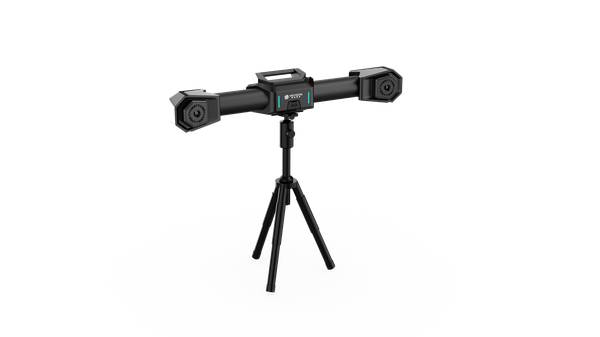
Structured light projects fringe patterns to triangulate geometry—effective for macro-scale features and reverse engineering workflows. White-light interferometry analyzes wave interference for sub-nanometer vertical resolution on smooth, reflective surfaces. Focus variation tracks sharp focal points through vertical scanning, handling steep flanks and rough textures that confound laser triangulation. Each technique carries trade-offs in speed, resolution, and surface compatibility.
Traceability to ISO 25178 and ASME B46.1 remains non-negotiable for production acceptance. More critically, industrial systems must deliver metrology-grade repeatability despite ambient vibration and thermal drift. When assessing 3d optical profilometer price against capability, consider how vendors integrate these sensors into ruggedized packages. INSVISION designs for factory-floor calibration stability—not laboratory conditions—ensuring data integrity where production actually happens.
Optical Metrology Techniques Compared
| Technique | Best For | Limitations |
|---|---|---|
| Structured Light | Macro-scale features, reverse engineering | Less effective on very smooth or highly reflective surfaces |
| White-Light Interferometry | Sub-nanometer vertical resolution on smooth, reflective surfaces | Struggles with rough textures and steep flanks |
| Focus Variation | Steep flanks, rough textures | Slower than structured light; limited on very smooth surfaces |
The Invoice Doesn’t Tell the Whole Story
A production manager at a Tier 1 automotive supplier recently compared quotes: a mid-tier interferometer versus a shop-floor-hardened system. Six months post-installation, the “cheaper” option had accumulated recalibration costs and downtime from vibration sensitivity. The 3d optical profilometer price on the purchase order rarely reflects total cost of ownership.
Legacy architectures built for controlled environments demand ancillary infrastructure when deployed near CNC machines. Vibration isolation tables, climate-controlled enclosures, and frequent calibration cycles generate operational expenses absent from capital budgets. Modern platforms—INSVISION’s robot-guided inspection configurations, for example—embed vibration compensation and auto-calibration in hardware rather than environmental controls.
Software integration carries equal weight. Systems communicating directly with PLCs or MES platforms eliminate manual data transcription and reduce first-article inspection bottlenecks. Bruker’s ContourX-500 launch this past March emphasized AI-assisted analysis for exactly this purpose, targeting substantial reduction in measurement cycle time. Procurement teams evaluating surface metrology investments should weigh integration readiness and calibration stability alongside hardware specifications. Production uptime—not capital expenditure alone—determines true cost.
Hidden Costs of Under-Specified Metrology Systems
- □ Recalibration costs due to vibration sensitivity
- □ Downtime from environmental instability
- □ Vibration isolation tables
- □ Climate-controlled enclosures
- □ Frequent calibration cycles
- □ Manual data transcription without PLC/MES integration
When Intelligence Reshapes the Value Equation
Raw specifications matter less than the path from raw data to actionable intelligence. Recent launches from Keyence and Bruker demonstrate that AI-assisted analysis has transitioned from differentiator to baseline expectation, compressing measurement workflows and automating defect flagging. This shift redefines 3d optical profilometer price calculations, elevating workflow efficiency alongside traditional metrics like pixel count or Z-resolution.
For quality managers, the operational impact spans fewer manual interventions and accelerated root-cause analysis during production runs. INSVISION addresses this transition through the X-Track optical tracking system. Engineered for high-mix manufacturing environments, it balances process agility with precision requirements. Rather than isolating data in proprietary formats, the platform integrates into existing quality workflows—enabling immediate response to GD&T deviations. Capital equipment evaluations should weight these operational advantages heavily. The expense that erodes margins is downtime, not acquisition cost.
Steps to Evaluate True Value in Optical Profilometry
- Assess whether AI-assisted analysis reduces measurement cycle time
- Evaluate integration with existing quality workflows and MES/PLC systems
- Measure reduction in manual interventions and faster root-cause analysis
- Confirm data interoperability beyond proprietary formats
- Prioritize production uptime over initial hardware cost
Field Performance Aligned with Production Reality
Keyence’s recent patent activity around vibration compensation underscores an uncomfortable truth: laboratory-grade resolution provides zero value when sensors fail under actual factory conditions. Production managers measure success in throughput, not specification sheet achievements. Verifying machined aerospace components or post-additive-manufacturing surfaces cannot require transporting parts to remote metrology labs.
Hardware must tolerate ambient vibration and temperature variation at the point of manufacture. Industrial-grade platforms like INSVISION outperform delicate interferometers in these environments. Systems delivering consistent repeatability under factory conditions prevent first-article inspection bottlenecks. Evaluating 3d optical profilometer price requires comparing complex setup requirements against ruggedized performance. Equipment demanding extensive stabilization per measurement consumes production time that eliminates initial hardware savings. Genuine value resides in optical systems engineered for factory rhythms, not cleanroom isolation.
“Laboratory-grade resolution provides zero value when sensors fail under actual factory conditions.”
Right-Sizing Technology to Application Requirements
Sub-nanometer vertical resolution justifies significant capital allocation for semiconductor wafer inspection or precision optical coatings. Deploying equivalent capability for automotive sealing surface verification destroys return on investment. The procurement error lies in equating higher specifications with superior quality control. In lean manufacturing cells where cycle time determines competitiveness, laboratory-grade interferometers frequently introduce unnecessary complexity.
While Keyence and Bruker appropriately target ultra-high-resolution segments with AI-enhanced platforms, the mid-tier industrial market remains underserved. Medical implant texture control or machined component GD&T verification demands repeatability and process integration—not resolution beyond tolerance requirements. Here, 3d optical profilometer price curves favor practical utility over laboratory specifications.
The INSVISION X-Track optical tracking system occupies this position, purpose-built for Industry 4.0 ecosystems. Rather than over-specifying for nanometer accuracy absent from tolerance stack-ups, industrial teams benefit from systems delivering reliable surface data directly to robot controllers or MES platforms—keeping production lines in motion. Understanding true 3d optical profilometer price means factoring in these operational efficiencies and long-term value.
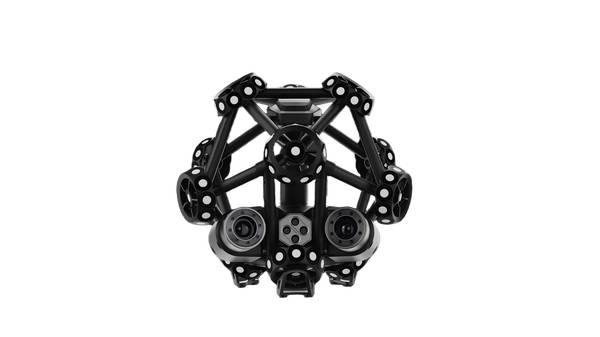
Lab-Grade vs. Factory-Ready Profilometers
| Lab-Grade Interferometer | Factory-Ready System (e.g., INSVISION) |
|---|---|
| Requires vibration isolation tables | Embedded vibration compensation |
| Needs climate-controlled environment | Operates under ambient factory conditions |
| Frequent recalibration | Auto-calibration in hardware |
| Proprietary data formats | Direct integration with MES/PLC/robot controllers |
| High initial spec, low uptime | Optimized for production throughput |