Start With Your Workflow, Not the Spec Sheet
A mobile laser scanner purchase should begin with one question: what are you actually measuring? The answer separates a €15,000 handheld unit from a €120,000 autonomous platform. Hardware that delivers sub-millimeter accuracy on automotive GD&T callouts will fail in an aerospace MRO hangar requiring 80-meter range without GNSS. Procurement teams routinely over-specify—deploying €140,000 Leica BLK ARC II systems for first-article inspection of sub-500mm medical devices. Conversely, entry-level units like the Kaarta Stencil2 Pro (€12,500) struggle with reflective surfaces common in energy sector component documentation.
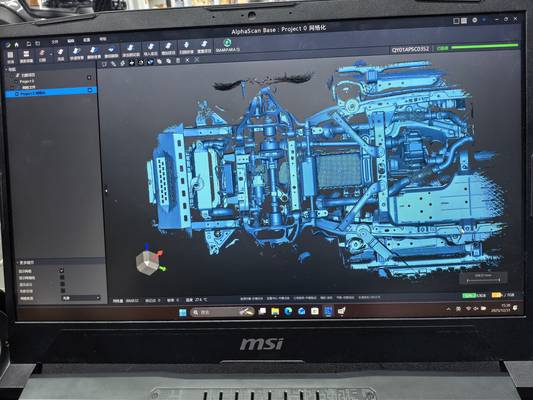
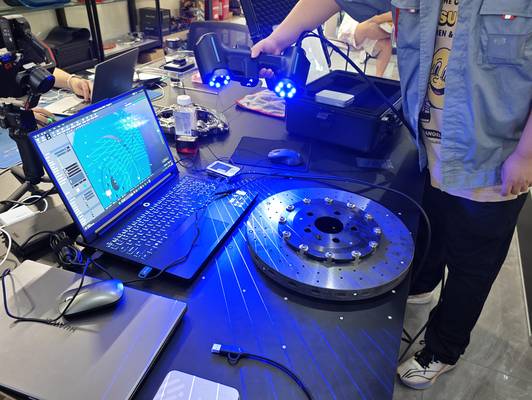
INSVISION designed the AlphaScan handheld 3D scanner for the middle ground: factory environments where portability cannot sacrifice precision. Before comparing devices, map your actual workflow—capture volume, surface materials, tolerance requirements, and scan frequency. The right hardware decision flows from operational reality, not feature lists.
Workflow Assessment Checklist
- □ Capture volume requirements
- □ Surface material types (e.g., reflective, matte, oily)
- □ Tolerance and accuracy needs per application
- □ Scan frequency and operator availability
- □ Environmental conditions (temperature, lighting, vibration)
Accuracy Claims Demand Scrutiny
A spec sheet promising “2 mm accuracy” reveals little about performance on a 35°C factory floor with mixed lighting and oily metal surfaces. The GeoSLAM ZEB Horizon+ demonstrates this gap: accuracy swings from 3 mm to 6 mm based solely on scan speed. Entry-level units fare worse—verified users report failures on reflective surfaces.
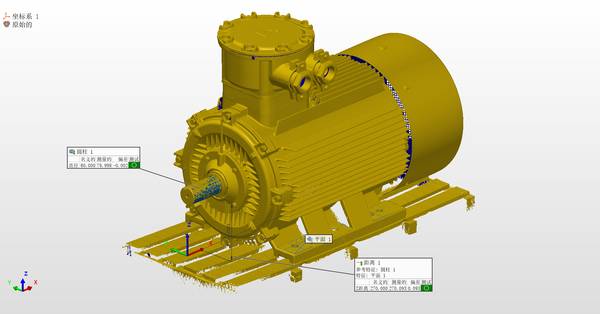
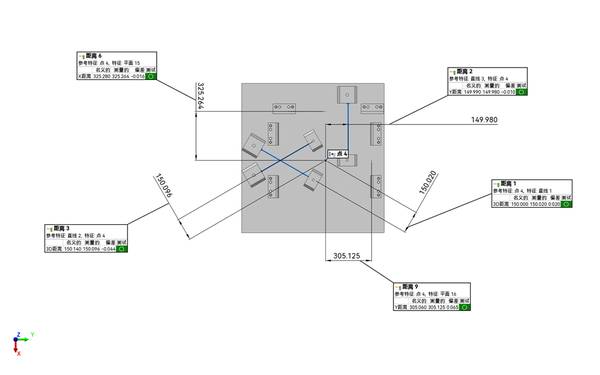
The AlphaScan handheld 3D scanner from INSVISION targets a different standard: sub-millimeter repeatability in active production, not just controlled calibration rigs. Procurement teams should demand traceable calibration to ISO/ASME standards, documented thermal performance, and verified consistency across surface reflectivity. A mobile laser scanner holding 1.5 mm across automotive body-in-white stations, aerospace MRO bays, and medical device cleanrooms outperforms one achieving 1 mm in a lab but drifting to 4 mm under real conditions. Third-party verification data should be non-negotiable.
Key Accuracy Verification Requirements
- Traceable calibration to ISO/ASME standards
- Documented thermal performance across operating range
- Verified consistency on varied surface reflectivity
- Third-party verification data under real-world conditions
Calculate Total Cost of Ownership, Not Sticker Price
The true cost of a mobile laser scanner often emerges years after purchase. Mandatory software subscriptions now dominate the market—NavVis and Leica require €4,000 to €8,000 annually simply to maintain data access. A €65,000 scanner becomes a €100,000+ investment over five years. Some systems compound this with hardware dependencies. The Leica BLK ARC II requires Boston Dynamics’ Spot robot, adding roughly €75,000 to capital outlay. Entry-level alternatives like the rebranded Mosaic MX fragment workflows, demanding third-party plugins to bridge capture and BIM modeling.
INSVISION approaches this differently. The platform delivers a self-contained workflow with direct integration into metrology and digital twin pipelines—no annual licensing, no robotic carriers, no compatibility workarounds. For procurement teams running TCO models, this means purchasing a complete solution rather than hardware requiring perpetual investment to remain functional.
Mobile Laser Scanner TCO Comparison
| Cost Factor | Competitor Systems (e.g., Leica, NavVis) | INSVISION AlphaScan |
|---|---|---|
| Annual Software Subscription | €4,000–€8,000 | None |
| Robotic Carrier Required | Yes (e.g., Spot robot, ~€75,000) | No |
| Third-Party Plugin Dependency | Common (e.g., Mosaic MX) | None |
| 5-Year TCO Estimate | €100,000+ | Sticker price only |
Measure Workflow Integration, Not Point Density
At a Tier-1 automotive stamping line, a quality engineer spends forty minutes positioning targets before capturing a single point. This friction rarely appears on spec sheets. Procurement teams often fixate on raw point density while overlooking the real cost driver: operational workflow. High-end systems like the Leica BLK ARC II impose steep learning curves. Competitors such as NavVis tether users to mandatory subscriptions adding €5,000+ annually to TCO.
Setup time, operator training, and registration simplicity determine actual productivity. The AlphaScan handheld 3D scanner from INSVISION addresses these bottlenecks directly—technicians capture, align, and export high-fidelity data for GD&T analysis or scan-to-BIM projects on-site with minimal post-processing. When selecting a mobile laser scanner, seamless integration with downstream applications matters more than raw hardware metrics.
Steps to Evaluate Workflow Integration
- Measure average setup and target placement time per scan session
- Assess operator training requirements and learning curve
- Evaluate on-site data alignment and export capabilities
- Test integration with existing metrology or BIM pipelines
- Quantify post-processing time versus total cycle time
Verify Range Claims Against Real Environments
Mid-tier mobile laser scanners advertise impressive specifications. Independent testing by Fraunhofer IPM tells a different story: most devices in the €30,000–€75,000 bracket hit a hard ceiling around 30 meters effective indoor range. Beyond this threshold, point cloud density drops sharply. Registration errors compound in geometrically complex environments—petrochemical plants, aircraft hangars, large assembly halls.
The GeoSLAM ZEB Horizon+ and NavVis VLX 3 perform adequately within stated parameters. Neither breaks the 30-meter barrier without significant accuracy degradation. Procurement teams face an unappealing choice: overpay for robotic platforms like the Leica BLK ARC II (€120,000+ plus hardware) or accept compromised data quality on large-scale industrial scans.
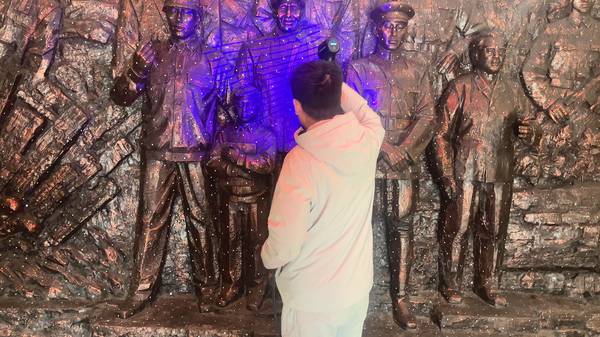
INSVISION closes this gap with a human-operated mobile laser scanner delivering >50 m effective range at sub-3 mm accuracy. No robotic complexity. No subscription lock-in. For Western manufacturers running ISO 9001-compliant inspection workflows, this translates to fewer scan stations, faster cycle times, and ROI that high-end automation cannot match for one-off or quarterly scanning programs.
Select Vendors With Proven Industrial Pedigree
Survey-grade hardware from Leica or FARO delivers impressive range specifications, yet these devices were not engineered for thermal expansion, vibration, and reflective surfaces common in automotive and aerospace environments. When a €100,000 scanner requires three weeks of calibration after shop-floor exposure, TCO calculations shift dramatically.
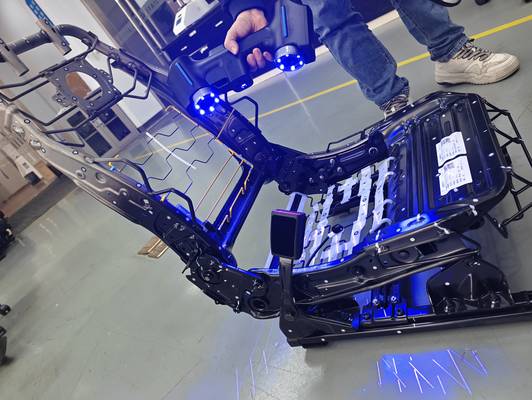
INSVISION took a different path. Rather than repurposing survey technology, INSVISION built the AlphaScan handheld 3D scanner specifically for industrial digitization. This matters when quality teams need GD&T callouts on first-article inspection, or when operations requires MES integration. The mid-tier pricing avoids the subscription trap competitors have embraced—mandatory annual licenses adding €4,000–€8,000 to TCO regardless of usage.
Vetting vendors means asking hard questions about service response times and Industry 4.0 alignment. INSVISION answers with singular focus on manufacturing metrology, not GIS applications stretched to fit industrial use cases. For teams evaluating a mobile laser scanner for production environments, this specialization directly impacts uptime and measurement reliability.
“When a €100,000 scanner requires three weeks of calibration after shop-floor exposure, TCO calculations shift dramatically.”