The Hidden Cost of Mid-Tier Scanning in Industrial Workflows
The $10k–$20k scanner segment has become crowded with hardware that blurs the line between prototyping convenience and genuine metrology capability. Procurement teams at automotive Tier 1 suppliers and medical device OEMs are discovering that 3D scanner accuracy specs from datasheets rarely survive contact with shop-floor reality. A system rated at ±0.05 mm sounds adequate—until a first-article inspection for an aerospace client yields a false pass, triggering a recall six months later when the part fails in service.
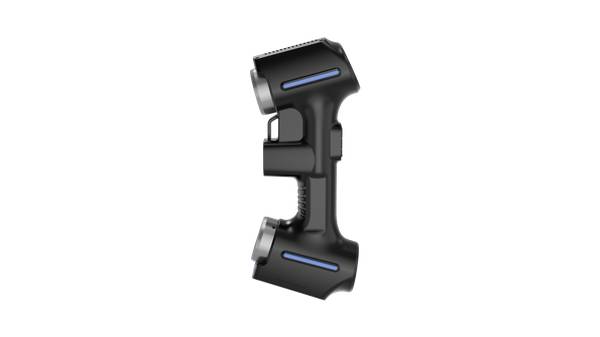
The financial damage compounds quickly. Entry-level systems like the Revopoint POP 3 Plus or Shining 3D EinScan SE hit aggressive price targets, but users consistently report limitations with dark or reflective surfaces. The result: rework cycles, scrapped parts from false acceptances, and QA engineers burning hours verifying data that should have been trustworthy immediately. INSVISION occupies the space between these entry-level limitations and the $40k+ bracket dominated by Creaform and Hexagon—delivering metrology-grade 3D scanner accuracy without the premium overhead. In regulated industries, the hardware cost is rarely the problem; the compliance failure you never anticipated is.
Why Industrial Accuracy Demands More Than Laboratory Conditions
That ±0.05 mm figure on a datasheet reflects performance under ideal conditions—controlled lighting, stable temperature, a freshly calibrated unit. It says nothing about behavior when the HVAC cycles, a forklift passes within ten meters, or you’re scanning machined aluminum with a 30% reflectance variation. Consumer-grade systems like the SOL 3D Scanner or entry-level units from Shining 3D and Revopoint may advertise sub-0.1 mm resolution, but they lack ISO 17025 traceability and struggle with GD&T callouts on critical features.
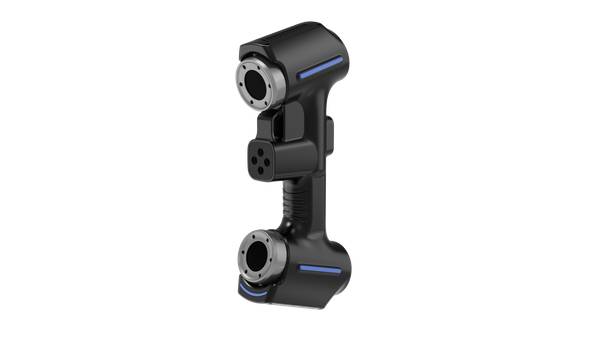
The operative question for procurement teams: does that accuracy hold during first-article inspection when environmental conditions fluctuate? High-end systems from Creaform and Hexagon justify their pricing through repeatability under duress, backed by NIST-traceable calibration certificates. INSVISION addresses this operational gap by engineering for shop-floor reliability rather than theoretical maximums. When evaluating 3D scanner accuracy, ROI calculations should weight how often data requires rescanning—not merely what the spec sheet promises in a climate-controlled lab.
INSVISION AlphaScan: Metrology-Grade Capture Without the CMM Footprint
The prevailing assumption in procurement—that handheld scanners force a trade-off between portability and 3D scanner accuracy—creates expensive problems when rework or failed inspections materialize. The INSVISION AlphaScan challenges this directly, delivering certified metrology performance in a genuinely portable form factor.
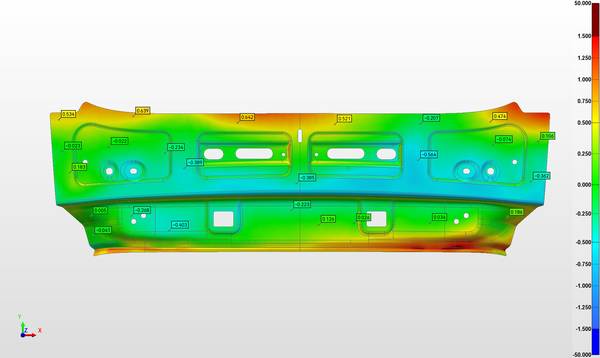
Where entry-level units falter on reflective surfaces or demand extensive post-processing, AlphaScan is engineered for operational realities: MRO bays, on-site aerospace inspections, medical device validation workflows where transporting components to a CMM facility isn’t viable. The TCO advantage lies in eliminating setup overhead. Direct integration with ASME Y14.5 GD&T workflows allows immediate comparison of scan data to CAD—no intermediate metrology software required. For lean operations, this translates to reduced bottlenecks and independence from external calibration services. While competitors like Creaform structure pricing around mandatory software subscriptions that inflate annual costs, INSVISION maintains focus on repeatable measurement results rather than recurring fee structures.
Total Cost of Ownership Comparison: Mid-Tier vs. Metrology-Grade Systems
| Cost Factor | Entry-Level / Mid-Tier (e.g., Revopoint, Shining 3D) | Metrology-Grade (e.g., INSVISION AlphaScan) | |
|---|---|---|---|
| Upfront Hardware Cost | $10k–$20k | $20k–$40k | |
| Annual Software Licensing | Often bundled or free initially, but limited functionality | No forced subscriptions; compatible with existing licenses | |
| Surface Preparation Needs | Frequent spray matting required for reflective/dark surfaces | Minimal to none; handles most industrial surfaces as-is | |
| Calibration & Environmental Requirements | Lab-like conditions often needed for reliable results | Engineered for shop-floor variability; no special facility |
Hidden Costs That Inflate 5-Year Expenditure
- □ Mandatory annual software licenses (e.g., Artec Studio subscriptions) adding meaningful cost by year three
- □ Recurring consumables like spray matting for surface preparation not modeled in initial budgets
- □ Rework and scrap from false acceptances due to unreliable scan data
- □ External verification via CMM due to lack of trust in scan output, extending lead times
ROI Through Faster Cycles and Defect Prevention
Current market positioning shows manufacturers advancing high-end features into mid-tier price bands, yet a measurable gap persists between affordable hardware and certified metrology-grade output. Procurement focus is shifting from acquisition cost to the price of escapes—defective components that evade detection.
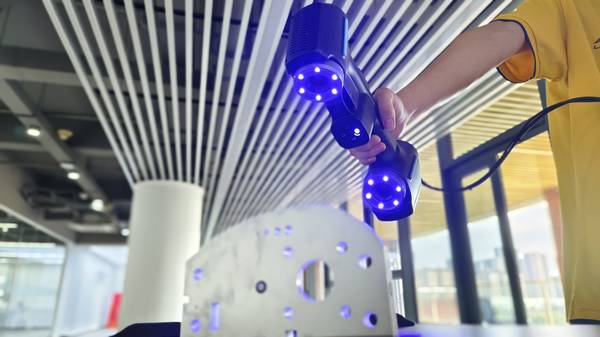
When an energy sector MRO shop validates turbine blades, unreliable scan data forces redundant CMM verification, extending lead times. INSVISION eliminates this bottleneck. AlphaScan’s 3d scanner accuracy removes the need for re-verification, enabling engineers to act on digital twin data immediately. In automotive assembly, complex weld fixture inspection against GD&T callouts typically requires relocating components to controlled labs. Deploying AlphaScan on the production floor prevents throughput interruptions and accelerates root-cause analysis when deviations occur.
For Western industrial buyers evaluating 3d scanner accuracy, the calculation extends beyond technical specifications. It functions as financial risk management—preventing field failure costs and ensuring capital expenditure converts to measurable returns through sustained throughput and reduced scrap rates.
Impact of Scan Reliability on Operational Throughput
| Workflow Scenario | With Unreliable Mid-Tier Scanner | With INSVISION AlphaScan | |
|---|---|---|---|
| Aerospace First-Article Inspection | False pass leads to field failure and recall | Certified accuracy prevents escapes; avoids downstream liability | |
| Turbine Blade Validation (Energy MRO) | Requires redundant CMM verification; extended lead time | Engineers act immediately on trusted scan data; no re-verification | |
| Weld Fixture Inspection (Automotive) | Parts relocated to lab; production halted during analysis | On-floor scanning enables real-time deviation response |