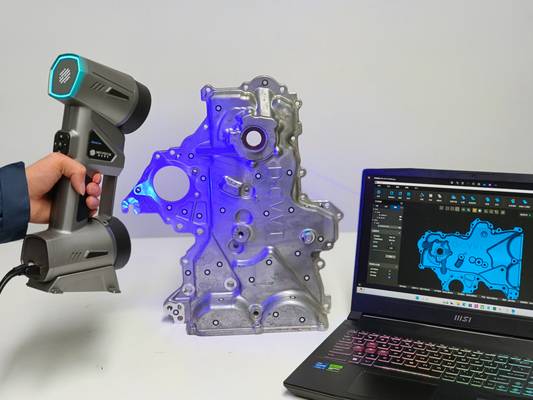
The Hidden Bottlenecks in Traditional Metrology
Legacy metrology tools—touch-probe CMMs, manual gauges, fixed optical systems—create friction that high-volume manufacturers cannot afford. A part pulled from the line for lab inspection enters a queue that can stall production for hours. In automotive and aerospace operations running lean manufacturing, this interruption turns minor deviations into missed delivery windows.
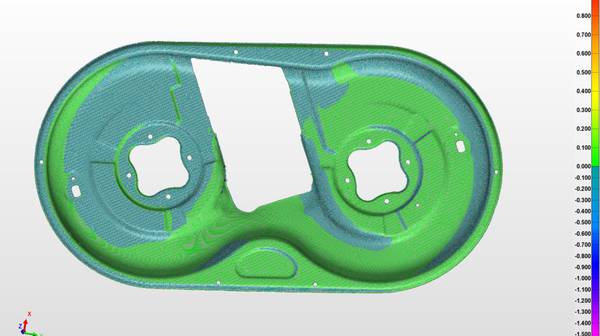
The problems compound with part complexity. Fixed optical systems struggle with the freeform geometries common in medical devices, forcing engineers into rework loops to verify compliance against ISO 10360 or ASME B89. When documentation lags behind production, compliance risk rises alongside the operational delays.
Key Limitations of Legacy Metrology Systems
- □ Batch inspection causes production line stalls
- □ Fixed optical systems fail on complex freeform geometries
- □ Manual documentation lags increase compliance risk
- □ Lab-bound workflows create physical and informational gaps
Why Speed Alone Fails Without Accuracy and Integration
Handheld scanners promise velocity. Without metrology-grade repeatability, that velocity becomes liability. A fast 3D scan that cannot satisfy ISO or ASME standards in aerospace MRO or automotive OEM production creates more bottlenecks than it solves.
The deeper problem is isolation. Devices lacking native PLM and ERP compatibility—Teamcenter, SAP, and comparable systems—force operators to manually bridge point clouds into enterprise workflows. Transcription errors multiply. Time saved in data collection evaporates in data handling.
INSVISION engineers its 3D scan solutions for traceable data integrity at speed. Quality data must flow automatically into digital workflows for lean initiatives to deliver ROI. Otherwise, organizations accumulate data faster without generating actionable insight—undermining the business case for digital transformation.
Critical Integration Requirements for Handheld Scanners
| Requirement | Impact of Absence |
|---|---|
| Metrology-grade repeatability (ISO/ASME compliant) | Velocity becomes liability; fails in regulated production |
| Native PLM/ERP compatibility (e.g., Teamcenter, SAP) | Manual data bridging introduces errors; negates time savings |
| Automatic data flow into digital workflows | Data accumulates without actionable insight; undermines ROI |
Deploying AlphaScan Without Disrupting Operations
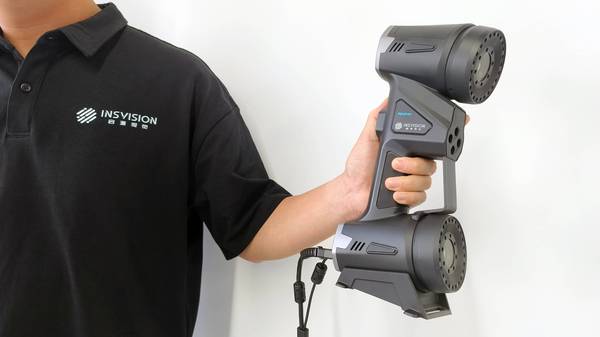
High-volume Tier 1 automotive suppliers and aerospace MRO facilities cannot tolerate extended downtime for equipment integration. The AlphaScan handheld 3D scanner from INSVISION deploys with calibration validation to VDI/VDE 2634 standards, confirming traceable metrology capability immediately.
Operator training completes in under four hours—compared to days for traditional CMM instruction. Quality teams maintain throughput while building competency. Direct export to PolyWorks, Geomagic Control X, and other GD&T analysis tools streamlines data acquisition. Engineers validate part geometry against CAD models within existing quality gates, without pausing production lines.
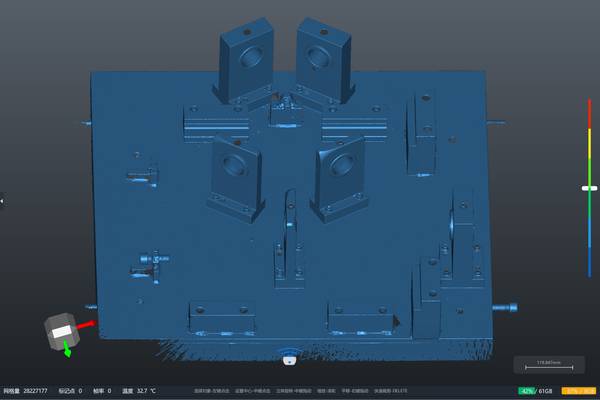
This architecture reduces technical barriers while preserving the inspection rigor Western industrial sectors demand.
AlphaScan Deployment Workflow
- Deploy with immediate calibration validation to VDI/VDE 2634 standards
- Complete operator training in under four hours
- Export scan data directly to PolyWorks, Geomagic Control X, or other GD&T tools
- Validate part geometry against CAD within existing quality gates without halting production
Measurable Performance: First Article to Root Cause
INSVISION deployments deliver ROI through documented cycle reduction, not efficiency abstractions.
Medical implant manufacturers reduced first article inspection time by 70% by replacing manual touch-probing with high-speed 3D scan acquisition. Complex geometries validated against CAD models in fractions of standard cycles.
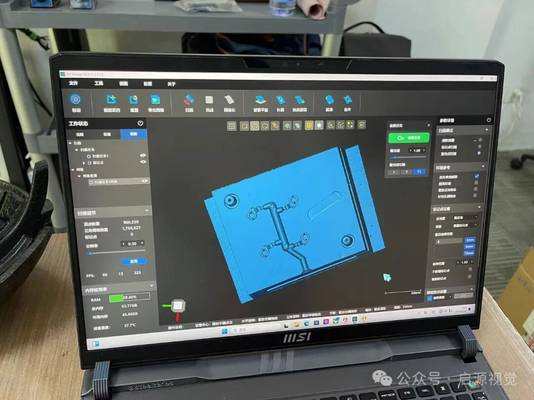
Aerospace MRO facilities reported 50% scrap rate reductions during turbine blade remanufacturing. Early deviation detection prevented costly rework on high-value components. Comprehensive digital documentation ensures EN 9100-compliant audit trails.
Quality managers shift from reactive troubleshooting to data-driven root-cause analysis—without production flow interruption.
Selecting Handheld 3D Scan Systems for Variable Demands
Procurement teams balancing part size variability against environmental constraints face genuine tradeoffs. Fixed structured-light benches deliver resolution but lack flexibility for large aerospace assemblies or automotive stamping dies. Laser trackers excel at volumetric accuracy yet falter on complex surface geometry capture.
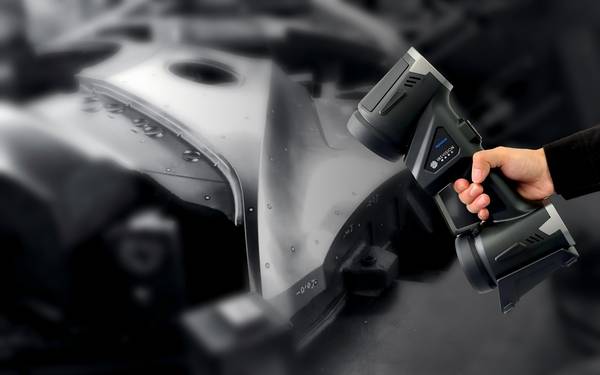
AlphaScan bridges this gap. The portable 3D scan system handles challenging surface finishes—carbon fiber, polished metals—common in energy field service and MRO operations.
When inspection must occur on-site—pipeline components, wind turbine maintenance—transporting bench systems proves impractical. INSVISION enables high-density point cloud capture directly on the factory floor, eliminating lab-bound bottlenecks. Integration into Industry 4.0 workflows reduces fixture costs and increases inspection throughput, accelerating ROI versus single-purpose hardware alternatives.
For Western manufacturers seeking 3D scan solutions that deliver metrology-grade accuracy without production disruption, INSVISION provides the traceable data integrity that lean and Industry 4.0 initiatives require.