The Rise of In-Process Metrology on the Factory Floor
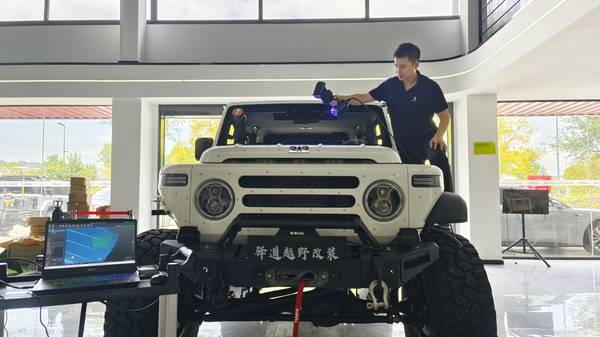
Halting a stamping line at a Tier-1 automotive supplier to queue for a temperature-controlled metrology lab kills productivity. This operational friction explains why dimensional inspection is migrating from dedicated CMM rooms to the production floor across Western manufacturing. Driven by Industry 4.0 and lean methodologies, sectors like aerospace MRO and energy now demand real-time feedback loops rather than retrospective quality reports. The transition requires hardware built for harsh realities, not sterile labs.
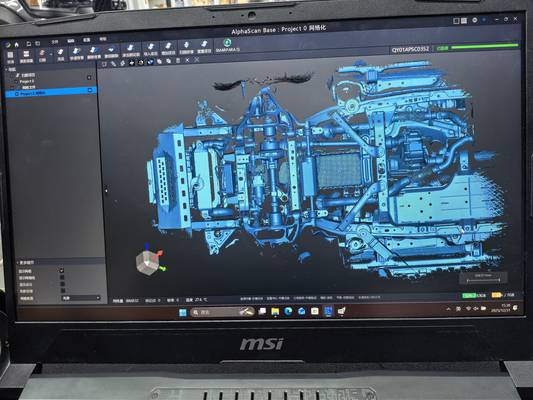
For procurement teams evaluating a 3d scanner buy, the priority has shifted toward versatility and speed on the line. INSVISION addresses this gap with portable solutions capable of scanning rates up to 7,100,000 measurements per second, functioning reliably in narrow spaces or vast assembly areas. By deploying AI-driven algorithms for on-site deviation analysis and GD&T verification, manufacturers bypass traditional bottlenecks. INSVISION enables this direct-to-manufacturing approach, allowing engineers to validate large parts or maintenance assets instantly and ensuring data flows as fast as production itself.
Technology Evolution: From Fixed Systems to AI-Enhanced Handheld Scanning
Fixed coordinate measuring machines once defined quality lab floor plans—stationary, climate-controlled, and inaccessible to production. That paradigm has shifted. Modern handheld scanners now deliver metrology-grade accuracy previously reserved for fixed installations, driven by three converging technologies: advanced blue laser projection, real-time tracking compensation, and AI-enhanced point cloud processing.
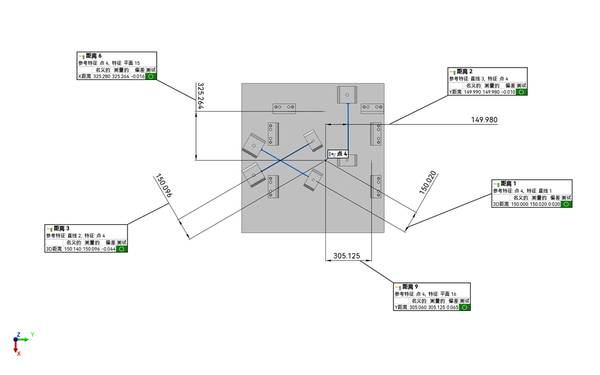
When evaluating a 3d scanner buy, the historical trade-off between portability and repeatability has largely disappeared. INSVISION’s AlphaVista demonstrates this shift: 50 cross blue laser lines capture data at 7.1 million measurements per second, achieving 0.073mm scanning accuracy with built-in real-time calibration. AI+3D algorithms enable high-precision reconstruction while maintaining traceability essential for ISO/ASME compliance. Dynamic tracking compensates for operator movement—addressing the handheld instability that once disqualified portable units from first-article inspection. PTB-certified software now handles GD&T callouts and deviation analysis against CAD reference models, workflows once exclusive to lab-bound CMMs. For automotive OEMs and aerospace MRO operations running lean, dimensional verification moves to the part, not the reverse.
Key Advantages of Modern Handheld 3D Scanners
| Feature | Benefit | Source |
|---|---|---|
| Scanning rate up to 7.1 million measurements/sec | Real-time feedback without halting production | |
| 0.073mm scanning accuracy | Metrology-grade results on the shop floor | |
| PTB-certified GD&T software | Compliance with ISO/ASME standards | |
| Dynamic tracking compensation | Stable results despite handheld motion |
Strategic Value of On-Demand 3D Digitization in Complex Environments
The assumption that high-fidelity metrology requires moving parts to controlled lab environments is becoming a liability in modern manufacturing. In high-mix, low-volume settings, transporting large assets—turbine blades in power plants or mining excavators—often exceeds actual inspection time. Portable solutions shift this dynamic. Verifying weld integrity deep within a shipyard’s confined compartments requires equipment that operates independently of rigid setups.
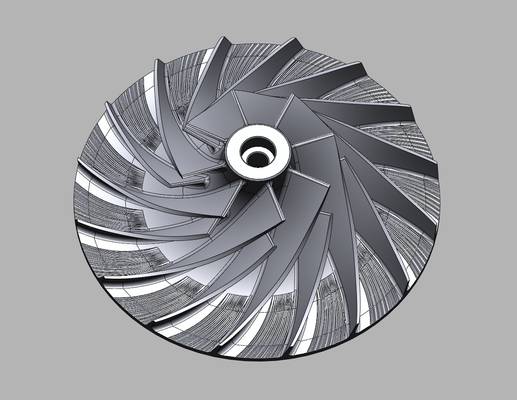
This is where on-demand digitization delivers strategic value. INSVISION systems allow operators to capture wear patterns or perform deviation analysis directly on the shop floor. With devices capable of single-hand operation and scanning rates of 7,100,000 measurements per second, part transport becomes unnecessary. For decision-makers considering a 3d scanner buy, the metric isn’t just resolution; it is maintaining GD&T compliance without halting production lines for logistical maneuvering.
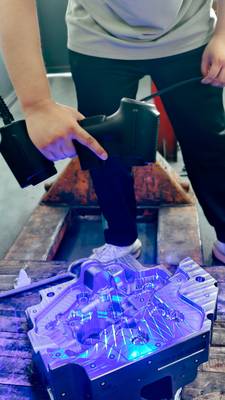
For automotive OEMs and aerospace MRO operations running lean, dimensional verification moves to the part, not the reverse.
INSVISION Role in the Portable Metrology Transition
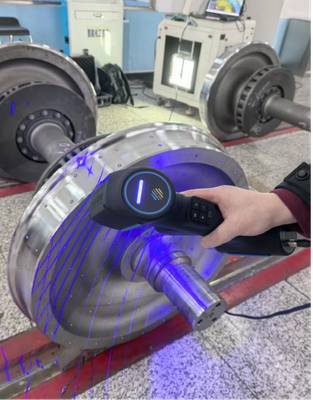
What defines a metrology-grade result when moving inspection from the quality lab to the shop floor? This question drives the current transition toward portable systems that maintain tolerance integrity in unstructured environments. INSVISION positions its AlphaScan handheld 3D scanner as a direct answer to this challenge. By fusing AI+3D algorithms with dynamic 3D laser projection, the device delivers high-precision reconstruction without fixed installation constraints. Whether scanning in tight confines or scaling large industrial assets, the system maintains repeatability where ambient conditions fluctuate.
For procurement teams navigating a complex 3d scanner buy decision, software verification is often the bottleneck. The AlphaScan platform runs on PTB-certified software with built-in GD&T tools and deviation analysis capabilities compliant with international standards. This technical rigor is backed by CE, FCC, and CNAS certifications. With deployments across 20+ countries, INSVISION demonstrates that portable metrology has moved beyond simple digitization to become a viable standard for industrial quality control.
What’s Next: Integration of Portable Scanning into Digital Twin and Smart Factory Ecosystems
Most manufacturers still treat portable 3D scanners as standalone inspection tools—isolated devices that output point clouds to be manually processed and filed. That model is becoming obsolete. The real value proposition when weighing a 3d scanner buy lies in connectivity: how effectively hardware feeds live measurement data into broader digital ecosystems. INSVISION has positioned its AlphaScan series at this intersection.
Beyond capturing high-density point clouds, these devices pair with PTB-certified software capable of CAD-driven task creation and automated GD&T analysis. The workflow shifts from “scan, export, analyze” to a continuous thread where deviation maps and tolerance checks populate PLM and MES platforms automatically. One-click reporting pushes results to cloud-based quality management systems. For automotive OEMs running inline inspections or aerospace MRO facilities tracking wear patterns across fleets, this convergence eliminates data silos that have long plagued first-article inspection and statistical process control. The handheld scanner becomes a node in digital manufacturing infrastructure—not an endpoint, making a 3d scanner buy a strategic investment in Industry 4.0 infrastructure.